Showing posts with label Urban River Hull. Show all posts

Sunday, 11 May 2025

A walk along the urban river Hull to Oak Road Lake

I walk to the river by Pearson Park and Stoneferry and take the rough public right of way opposite B&Q. One of the Moorhen adults is on the nest on its second brood, as the three youngsters dare to explore the other side of the pond, together with the other parent.

Moorhen on eggs.
One of the young under the bridge.
One of the young Mistle Thrushes had just been fed by a parent. The young seem not to want to go to the ground yet.
At Abbey Way I found a Song Thrush fledgling, still very confiding.
A Woodpigeon also allowed a close up.
The Swallows are back at Stoneferry Bridge. The river water made for a plain background as it saw preening.
A chirping House Sparrow.
Another pair of Swallows, the male singing.
Some gulls, Herring and Lesser Black-backed were in the river, but my target, Common Sandpiper, didn't materialise.


Whitethroat in front of the cormorant pylon.
Rarely I do see this pylon without one or more cormorants.
Stock dove on the same pylon.
Kestrel.
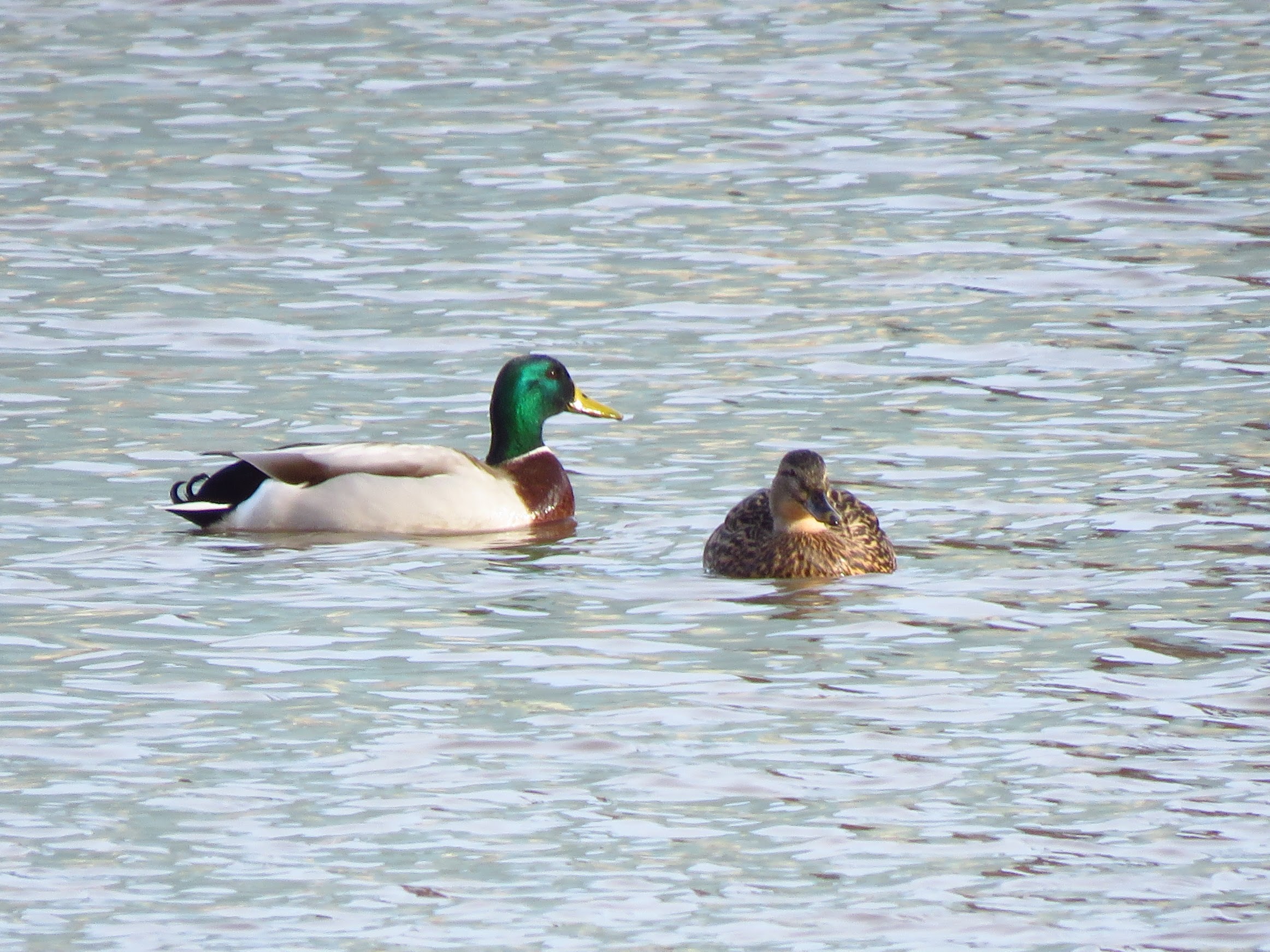
Mallards.
In a bend of the river with abundant reeds, the songs of Reed Warblers and Reed Buntings was almost continuous. The Reed Buntings were easier to spot, swaying as they sang atop their reed seedheads. I counted 4 territories in a short stretch.
This is the best I managed of a Reed Warbler.
A Blue Tit fed on reed seedheads.
Another Reed Bunting...
...and another. This one just by the entrance to Oak Road Lake.
There were two families of Mallard with ducklings in the lake.
The locals have built a sturdy screen to keep dogs, and people away from the incubating Mute Swan.
A Pied Wagtail picked insects from over the water surface, fluttering over the water. He is feeding young as if you click on the image you can she's carrying them in his bill.
Brown Rat.
There were two drake Pochards on the lake, which is unusual and more on this time of the year. A Cetti's Warbler sang from the fishing peg area.
I returned by Hardy Street and the Swifts were around.
And to finish, how about this Woodpigeon, landing right next to the Peregrine Falcon? The pigeon had a very good look before taking off. The falcon didn't even move.


Wednesday, 9 October 2024

Urban River Hull and Barmston Drain with Hull Nats

I get bus 5 north early in the morning and I start my walk at the top of Beverley Road, then I cut across by the path along the field to Raich Carter way bridge. I'm joining Hull Nats later at Ennerdale, but I want to walk the whole of the urban stretch of the river Hull. A skein of Pink-footed geese fly calling overhead. It is cloudy, but calm. Their early commute to their day-time feeding grounds, flying north in the morning, has been a daily occurrence in the last couple of weeks.

Pink-footed Geese.

Another reason I started the walk early, is to check the Bransholme reservoir for migrant wildfowl. Unfortunately, the water level was very high, with no marginal vegetation exposed, so there were not many birds about. A mixed gull flock roosting in the centre, some Tufted Ducks and Cormorants resting on the pumping station building were the only highlights.

Cormorants.
Looking south from the floodbank of the river Hull by the reservoir. It is almost high tide.
Some soft vegetation rafts move quickly up river with the tide. The photo also shows the thick belt of reeds along stretches of the river. In the spring, these are noisy with Reed Warbler and Reed Bunting's song, but not today.
A pair of Jackdaws inspect this hole in a poplar trunk. The same hole is used by Stock Doves at times.
A very vocal Buzzard is perched on a lamp post just north of Ennerdale.
I flush a Roe Deer doe on the grassland by Ennerdale. She gazes at me for a few seconds before bounding away.
A young Grey Heron by the river.
A view of Sutton Bridge.

Eleven members assembled in Ennerdale car park and started the walk along the west bank of the river. The route, planned by Richard Middleton, involved a couple of strategic shortcuts across some of the most industrial meanders of the river, which also allowed to walk along green stretches of the Beverley and Barmston Drain.

The empty cocoons of the zigzag elm sawfly Aproceros leucopoda, an invasive species that is spreading north. The larvae feed on elm leaves creating a characteristic zig-zag pattern. As they grow the eaten patches increase and in some conditions they can defoliate trees. The cocoon was like a silken lacy cage and had an opening on one side. We found several cocoons, and no larvae. This patch of elm suckers on the corner of Air street cemetery holds the only known colony in Hull so far. 

We continue along Bankside and then take the cycle track towards the drain. We have our lunch there, by the recently mowed banks of the drain. It is warmer and we've got some sunny spells. Coneheads are calling from grassy patches along the cycle track. Afterwards, we continue along Bridlington Avenue and join the river again at Wincolmlee. We follow the river until the Humber from then onwards.

A pair of Green Mesh Weaver, Nigma walkenaeri, mating on an ivy leaf.
A Redshank just north of Scott Street Bridge.
A lush Lady Fern growing in the space between two walls at Scott Street Bridge.
The Humber, and the view towards The Deep earlier in the walk (top shot).


Sunday, 12 March 2023

March at the urban River Hull


High tide at 9 am, I head for Scott Street bridge early. I'm entertained along the way by a small group of Siskins feeding on a group of mature Alders at Amazing Community Garden. Incredibly acrobatic, one of them hangs upside down picking seeds from the Alder cones. There is chasing and also chorus singing, something flocks of Siskins engage in like Goldfinches do. It's been a great winter for Siskins in Hull.

Another stop was to try and get some photos of a Goldcres in good light. Always happy to get a record shot!

Crow nest building.

As I get to Scott Street Bridge I notice the stiff southwesterly. A pair of Mallard are courting on the river, and a single Redshank is roosting on the wall.


Dunnock.
I find the Redshank roost at their mooring spot, only that this time some of them are of the barge. They are starting to stir as it is after high tide.


It is not until I return by Scale Lane bridge that I see the Curlew, as it happened last time, so I think that it must be roosting just on the bridge itself. My surprise is when the Curlew starts calling and chases another individual away.


Curlew Calling and displaying.
Curlew Calling.
I return via Queens Gardens, where I find this Moorhen.