Showing posts with label Welwick Saltmarsh. Show all posts

Monday, 10 November 2025

Holderness: Patrington to Welwick circular

A bright morning, the cupola of the Holderness sky pale blue streaked with light clouds. I took bus X7 to Patrington and walked to Patrington Haven, then heading to the recently completed managed realignment around Welwick saltmarsh, which has been named The Outstrays. The place is unrecognisable as the flood bank has been moved inland, and what used to be fields is now establishing saltmarsh with Brent grazing, wideon splashing and Little Egrets looking for small fish and invertebrates in the new creeks and lagoons. 

A Jackdaw looks on from its chimney pot at Patrington.
Rook at Patrington.
One of two Curlews feeding on a field by Patrington.
Two Grey Wagtails and a PIed Wagtail were feeding on a roof at Patrington Haven

A Girdled Snail, several were out around a large ivy at Patrington Haven. This is an expanding species.
Grey Heron.
An interpretation panel at the Outstrays.

A large flock of Curlew feed on a grassy area recently created. I move onwards by the quarry of Haverfield, now vegetated with hawthorn and other trees. I ponder what was extracted from the quarry when the materials on some molehills remind me: this is a fossil dune which used to be the shore of the Humber before land was reclaimed and Sunk Island was annexed to the mainland. I decide I need to do this walk again in the summer, looks wonderful for bush-crickets and dragonflies and other insects. In fact, a bumblebee is now feeding on some late bramble flowers and a dronefly lands to bank in the sunshine. 

A buzzard mews and is chased by crows. As I emerge from the quarry there is a view of the new freshwater ponds. There are many birds including Teal, Shoveler and a Little Egret. A Shelduck lands. Then I spot a Kestrel that looks like has caught a big bird and is mantling it, there are distress calls and much flapping, but as I focus my binoculars I realise there are two Kestrels in a dogged fight, they separate and come together again. Their calls attract the attention of crows and of a Sparrowhawk. I watch them as they pursue each other and come to the ground again, one of them hovering over the other. One looks like a female, the other a young male.

Greylag Geese by Haverfield.
Fighting Kestrels.
Fighting Kestrels.
Sparrowhawk fly over.
Yellowhammer.
The footpath doesn't go on the flood wall, but behind it to avoid disturbance, but as I get to Sheep Trod Lake there is a new viewpoint with a screen with windows and seats. I take a seat and eat my lunch watching and listening to the Brent Geese just in front of me. The screen faces eastwards and the Spurn Lighthouse is visible in the distance behind the new marsh (top shot). Afterwards, I walk towards Welwick and then, given that traffic is quite light, I walk along the main road to Patrington to get my bus back.

The new screen.

Little Egret.
Brent.
Kestrel. A day of many kestrels!
Shelduck and Brent.
St Mary's, Welwick.

The gunpowder plot sculpture near Welwick. Two of the plotters were brothers that were born and grew up at by Plowlands Farm.

Sunday, 8 September 2024

The Outstrays with Hull Nats


An irregular drizzle followed us most of the day in our visit to the Outstrays, a managed realigment site on the easternmost field of Sunk Island (read about the reclamation of Sunk Island in a previous post). We have parked on the Outstrays farm, then make our way to the pumping station. We can see some scrapes developed on the other side of the drain, which are busy with waders and gulls. A Wheatear is seen atop a mound of soil.
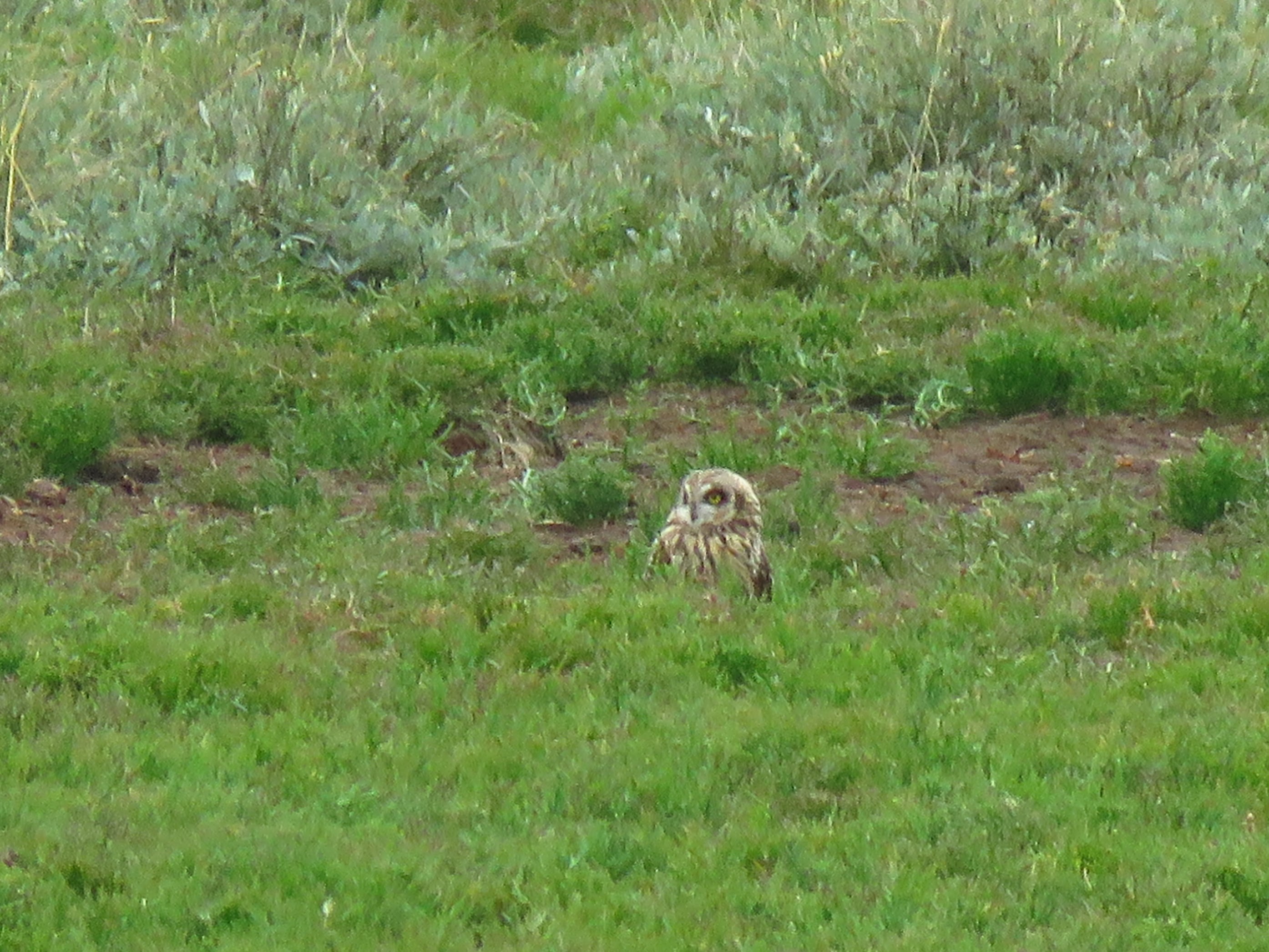
Saltmarsh has developed on much of the surface  of the realigned land (top shot), and we spend some time identifying the saltmarsh plants. A strange, harsh call, almost like a water rail rose from the edge of the marsh. Two Whimbrels then called their wonderful ringing call, rising. Shelduck, Ringed Plover, Dunlin and Redshank fed on the ebbing tide. Cormorants dried their wings from driftwood. I flush a Short-eared Owl, and it flies away, then drops on the marsh.

Mute Swans.
Avocet on the new scrape.
Whimbrel.
Redshank, Dunlin and Ringed Plover.
Sea Lavender.
A view of the saltmarsh.
After a while, we notice that the odd lump in the middle of the saltmarsh is actually a beached whale (see top shot). We try to make sense of the carcass, we discuss if it could be a baleen whale given the shape of the mouth, but we don't make much progress on this. The only recent stranding we've heard of is up to 5 male Sperm Whales near Spurn, Skeffling and Cleethorpes.

My best shot of the stranded whale. We can't get any closer as there is a deep gully on the way. I think the mouth is on the right, and a fin can be seen in the middle.

The Devil's Coachman, Ocypus olens.
Roe Deer.
We walk to the meridian monument and then take a path to the edge of the marsh, looking for the shelly beach. Although we don't find it, we have the chance of comparing the flora of both sites and spot some excavated nests that could be those of the Sea Aster bee on the side of a short muddy ledge. And just before leaving the site, probably the same Short-eared Owl flies over, giving me a chance for a few photos.

Short-eared Owl.

Sunday, 10 October 2021

Kilnsea Wetlands and Welwick Saltmarsh


Yesterday's trip felt quite short. I rarely go to Spurn lately without stopping at Kilnsea Wetlands. So I did another trip to the area today, stopping at Welwick Saltmarsh NR on the way back to check the Sea Aster bee colony.

It was a couple of hours before high tide, so I was expecting waders at the wetlands, but the diversity of waders was amazing to behold. Some of these afforded close views as they fed just in front of the hide, Little Stint and Ruff especially, but also Spotted Redshank.
Ruff.
Distant Greenshank roosting.
Ruff.
A large flock of Redshank. A Common Sandpiper walks behind. 
A lone Golden Plover.
Caspian gull?
Little Stint

Little Stints.
Pintail.
Curlew Sandpiper and Ruff
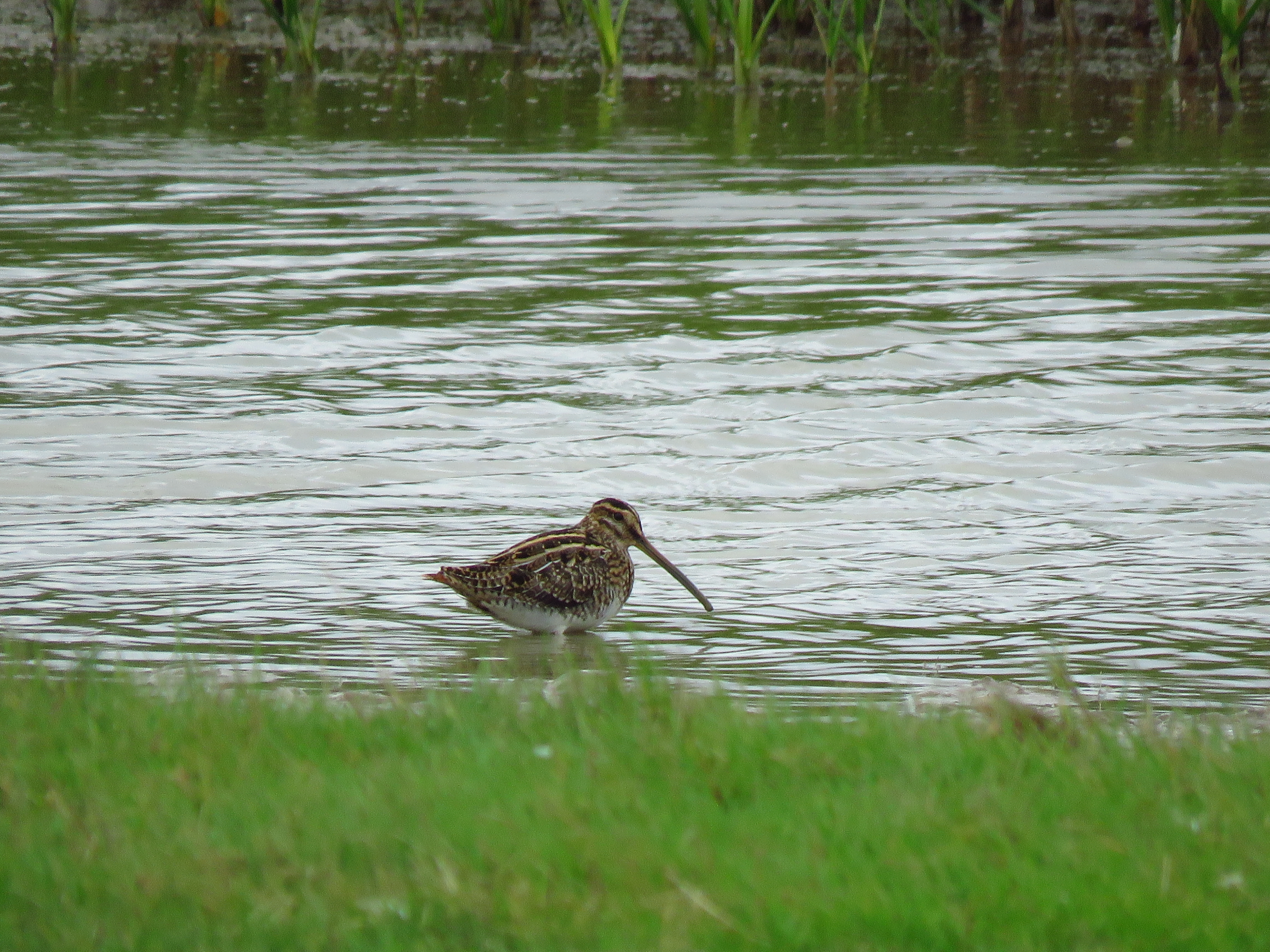
Snipe.
After an hour in the Wetlands I moved to Welwick. The weather was staying quite cold (everyone in the hide was complaining about how cold it was), cloudy and breezy. I walked along, searching for banks with holes. I was starting to be doubtful if any bees would be active in this weather. Then I noticed an open sandy bank with plenty of holes by the path, and plenty of bees! Sea Aster bees are solitary bees, meaning there are no workers, just males and females. After mating, females dig their nests and lay their eggs in cells under the sand, which they provision with pollen mainly from Sea Aster. Despite the 'solitary' label, these bees form colonies, and many nests can cluster in a particular area.

One of the colonies.
The second colony nearby.
I crouched down to have a good look at the Sea Aster Bees. There was a lot of activity, with bees coming in and out of their nests.
Sea Aster bees.
One of them by two nests.
There were so few flowers about, I wondered where the bees travel to collect pollen. Would they fly as far as Kilnsea and Spurn? A single thistle flower had two bees clinging to it.
I walked a bit longer on the sea wall. I flushed two Short-eared Owls, which was a surprise. A third individual was present. They flew over the marsh, landed by some sheep and mobbed some crows. They were lovely to watch.


I turned round not wanting to disturb the owls. A Wheatear landed on the marsh, only to be chased by a Swallow. The young Swallows were being fed on the wing. As I returned I checked the bee colonies. There wasn't a single bee to be seen. I had been lucky they had been active earlier, maybe the sky turning darker had sent them inside their nests.