Showing posts with label banks. Show all posts

Tuesday, 13 March 2018

Walking the Humber. Stage 8. Hedon Haven to Paull

I park by the sea wall at Paull. The tide is low, and there is light cloud with a few sunny spells developing later. It is very mild, with little or no wind. I climb the sea wall and walk up the estuary towards Hedon Haven.
 A dozen Curlews feed on an arable field by the village called South Pastures, a reminder that much land by the estuary was flooded at spring tides and was therefore grazed. After the sea wall was built to protect the village from flooding, the field could be ploughed and used for crops.
 From the other side of the wall, I hear the hoarse croaks of squabbling Shelducks. Many of them are scattered across extensive mudflats feeding on the wet mud.
Chasing Shelducks.
Shelducks feeding on the mudflats by Paull village.
A couple of Cormorants make use of wooden structures marking the deeper section of the Hedon Haven channel.
The tidal river that is Hedon Haven roars down, swollen by yesterday's rain all the way up to Pollard Clough (top shot). The Clough is a sluice which prevents sea water from going upstream during high tides and eases flow at low tide, preventing flooding upstream. Teal, redshank and a lone Black-tail Godwit rest on the shore...
and a Curlew feeds on the other side of the Haven.

The old carcass of a large ship is beached on the saltmarsh opposite, like a fossil witness of the era when Hedon Haven was used for navigation, holding a fleet of shrimping boats.
I cross the clough and continue on the other side of the Clough, downstream.

 I am surprised to see a pair of Roe Deer, at the other side of the fence on the Salt End grounds, with the towering presence of a cooling tower of the power station as background. They seem completely unperturbed and carry on grazing.
Female Roe deer.
Male Roe Deer.

There are a few ponds with some grassland around. On the path the remains of gravid frogs, the uneaten spawn of at least three, maybe eaten by a fox.
I reach the end of the path, with a metalling fence blocking the way around the Salt End site, so I return towards Paull. The clouds are parting and is noticeably warmer
 I get a straight view towards the Humber Bridge, with the exposed mudflats and feeding birds on them.
 The beach at Paull, with a couple of rotting boats. The shipyard is on the background on the left.
The sea defences at Paull are being repaired or replaced around the shipyard and just north of the lighthouse. This is the view from the street, into a courtyard. Instead of making the sea wall higher in front of the houses, a reinforced glass window has been placed atop the wall, allowing the visitors and locals a view of the Humber.


Paull Lighthouse.
The long glass wall around Paull.
As I cross the playing fiend by the sea well works, a Small Tortoiseshell, my first butterfly of the year flies past, setting ahead on a mole hill.
I take a little detour into the woods by Paull Fort, which is on a small promontory (about 10 m high) on a glacial moraine, which also explain other hills near Paull. I flush a Woodcock from the undergrowth just by the ditch around the fort wall.
 I continue into the old sea wall holding two lighthouses. This is Paull Holme Strays, which I will explore more fully in the next stage.
 I have lunch on the wall by the red lighthouse. Past the breach, a flock of Golden Plover circles and then settles on the mudflats. There are Lapwing, Redshank, Dunlin, lots of Wigeon and Curlews. Again, a telescope would be very useful as the birds are mostly distant.
Golden Plover.
Carrion Crow on drift wood.
The western breach at Paull Holme Strays.
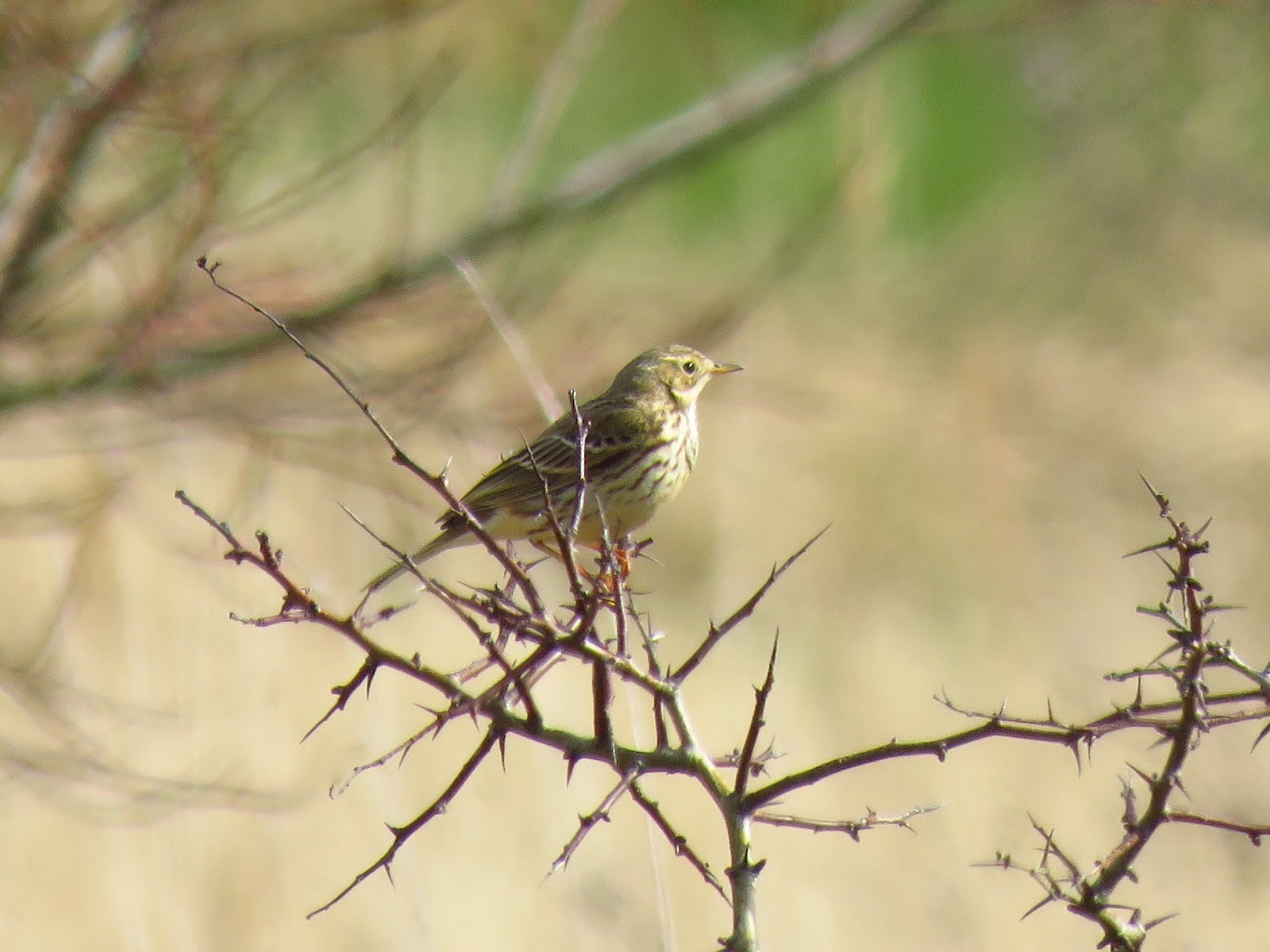
Meadow Pipit. Just landed from its parachute song display.
Some House Sparrows sand bathing on the side of the road at Paull village.
Time to head back home, really looking forward to the next stage!
Featured Bird: Shelduck
The Shelduck is our largest duck and it can be found in the Humber all year round. It is a striking bird, hard to confuse with anything else and easy to identify even at long distances due to its bold colour patterns. They appear black and white in the distance or at poor light, but on close views its bright vermillion red legs and bill and dark green metallic head and maroon bands become apparent. The male is visibly larger than the female, with a large knob on the bill. Shelduck are Amber status, and the Humber holds over 4,000 individuals during winter and a moulting aggregation in late summer, when these ducks are unable to fly and therefore vulnerable. They also breed in the area.
Today's stage walk, 9.37 km.

Wednesday, 20 September 2017

River Hull. Stage 14. Skerne Wetlands

It was a warm day, still and with light cloud, with a very autumnal feel. Robert Jaques joined me in a walk around Skerne Wetlands, meandering around the river Hull. The area is a very new Yorkshire Wildlife Trust nature reserve, still undergoing restoration work to convert a former trout fishery into a more natural and biodiverse wetland as an integral part of the River Hull floodplain.
 This upstream stretch of the river, which is a chalk stream, is called the West Beck. It is narrower and deep, its waters transparent, its banks lower and clothed in vegetation and willows. A kingfisher flies off from near the bridge over the river. Pools and ditches sandwich the river. Some of the pools where fish were reared are now fringed by reeds, and short after our arrival a Marsh Harried flew off. The squeals or Water Rails could be heard from the reeds.
 We walk south towards Corpslanding on the east bank of the river, the path covered on long wet grass (note to self: must bring wellies next time). We alert three Roe Deer, which were resting and feeding on the bank, and they slowly move away behind some trees. We turn round to walk upstream from there. We flush a Kingfisher twice more. The stage finishes when we hit a non entry barrier by the weir opposite Copper Hall. The north side of the reserve is accessed more easily through Wansford and Snakeholm pastures, which will be the next river stage.
Information panel by the car park.
Reed beds by the river, looking SW.

The River Hull or West Beck from the bridge, looking downstream.
Little Egrets.
Roe Deer.
A family of Mute Swans, with five young of the year. 
The meandering river looking upstream.

More Information
Skerne Wetlands. YWT website here.

Monday, 22 May 2017

River Hull. Stage 10. Leven Canal to Baswick Landing

This is a very remote and beautiful stretch of the River Hull, with just a few farms. Not only there are no bridges, there are few roads reaching it, so after some consideration I decided to start the stage at Baswick Steer farm, where I parked, walk down river until Leven Canal and then return via the same route.
 It was a warm, sunny day with a southerly breeze. Baswick Steer is a farm by the River Hull with a gate that allows access to the public footpath down river. On the opposite bank is Tophill Low, the Yorkshire Water nature reserve, so I expected to see some interesting wildlife.
 Most of the river floodplain here, as in previous stages, is on very low lying agricultural land and pastures, the large fields are drained by ditches, with hedgerows and the occasional copse. The river is still corseted by high grassy, level clay banks. The water is now quite clear, and there are some open accessible banks where I could see fish and aquatic invertebrates (top). Reed Buntings call all through the stage from patches of reeds. A Cetti's Warbler sings near High Baswick farm.
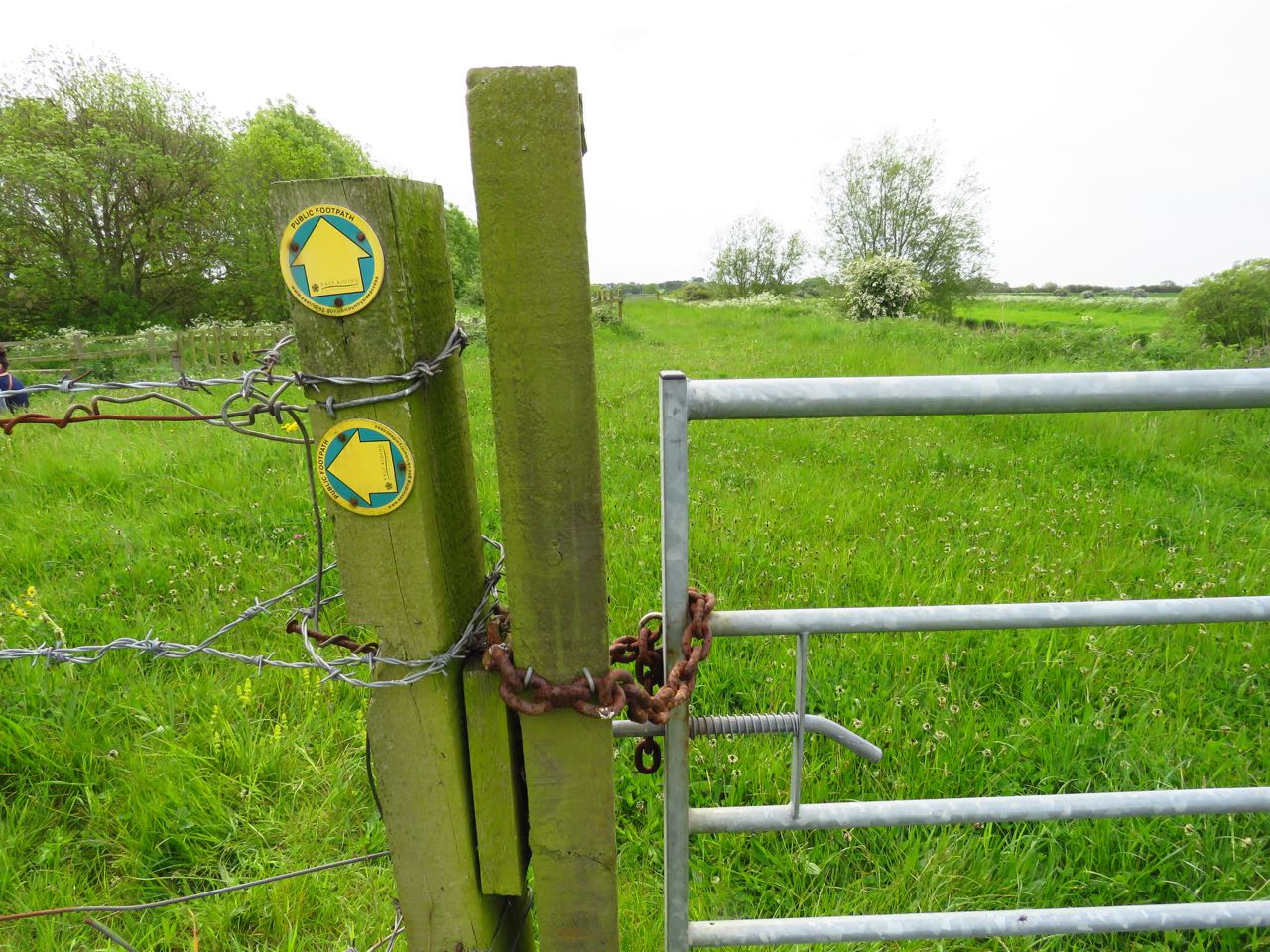
Despite the signs of Public Right of Way, gates between the farms did not appear to welcome the walker, as several were either padlocked, tied shut or were not easy to open. The path over the bank hasn't been mowed in months either, and in a section south of Linley Hill the grass is up to my waist.
 I pass by Wilfholme Landing, with colourful boats and boathouses where Swallows are nesting. There is also a House Martin colony in one of the houses and a pair of Pied Wagtails.
 This is also the first stage in the river in which I see dragonflies, the first one a Hairy Dragonfly near Leven Canal, which rises from the grass before I can take a photo. Also Large Red Damselfly and a couple of blue ones that don't settle.
I finally reached Leven Canal, a SSSI which runs in 5 straight km between Leven and the river. I had my lunch as a cuckoo called. A beautiful female Broad-bodied Chaser flew over, carrying prey. It found a sheltered spot by some brambles and settled, allowing close views. As I was still sitting eating, a Hobby! I dropped my food and grabbed the binoculars. What stunning raptors they are! Before it disappeared over the trees I even managed a record shot.
 It was time to turn round and retrace my steps (4.22 km each way was today's stage). The path I had opened on the tall grass made the going easier.
 Near Linley Hill Farm, I see a couple of black labradors on the bank, just ahead of me. Nobody is with them, my heart quickens. They spot me and come barking furiously. Shielding myself behind my backpack, I greet them as if they were my dogs, cheering and asking them to walk along back home. One of them calms down straight away and starts trotting back to the farm, the other barks for a while longer, but finally follows the other. I breathe a sigh, put my backpack on and carry on. Fortunately, they don't come out of the farm as I walk past.
 As I get to Baswick Landing, I go down to the bank to wash my feet. It's a muddy bank. I look forward to the chalk banks upstream for a dip!
 As I put the 4 km2 lists in Birdtrack, I realise that I've had 60 bird species today, a very decent list given it wasn't a nature reserve.
Baswick Steer farm, looking upstream. Tophill Low is on the left hand side beyond the river bank. 
The tiny jetty at Baswick Landing. 
A Moorhen busy carrying nesting material to the other side bank. 
Shelduck and ducklings. The drake flew off and circled over, trying to distract me from his family. 
Canada Geese family. 
An Oystercatcher rises to mob a Marsh Harrier near Tophill Low. 
Singing Whitethroat. 

Spotty horse. 
The flock of domestic geese have a couple of goslings. 
Colourful boats at Wilfholme Landing. 
Singing Swallow on a boat. 
The meandering river Hull. 
Little Egret.
mmmm... 
Female Broad-bodied Chaser. 
Record shot of Hobby
Large Red damselfly. 
The path I opened in the bank, on the way back. 
6 spot Burnet caterpillar (thanks to Harry Witts for ID). 
Benches overlooking the river at Linley Hill farm. 
Pied Wagtail by Baswick Steer Farm.
Mayfly. 
Stone Loach, thanks to Harry Witts and Robert Jaques for ID. 
Leech.

The stage map
Check the wild at Hull map for more details.

More information
Leven Canal. A Yorkshire Dragonfly Group site.
Tophill Low Nature Reserve. Website.