Showing posts with label Hayburn Wyke. Show all posts

Tuesday, 24 September 2024

Train trip: Cloughton Wyke to Hayburn Wyke


I take the train to Scarborough and then the X93 bus to Cloughton. I walk along the curiously called Salt Pans Road towards the coast. In the OS maps there are some 'salt pans' labelled on Cloughton Wyke by the beach, but the tide is too high to see them. Along the way, House Martins, Swallows, Meadow Pipits and Yellowhammers. Two Roe Deer run away, then settle at the end of a field.

A Rook carries an acorn to cache it.
Meadow Pipits.
Yellowhammer.
Roe Deer doe.

The bay is stunning, with large blocks of Jurassic sandstone rock at the base of the cliffs, the clifftops clothed on bracken. A Fulmar circles over the cliff.

Cloughton Wyke.
The wooded slopes looking north towards Hayburn Wyke.
Flowering Wood Sage.
European Goldenrod, a new plant for me.
The steep path down to Hayburn Wyke.
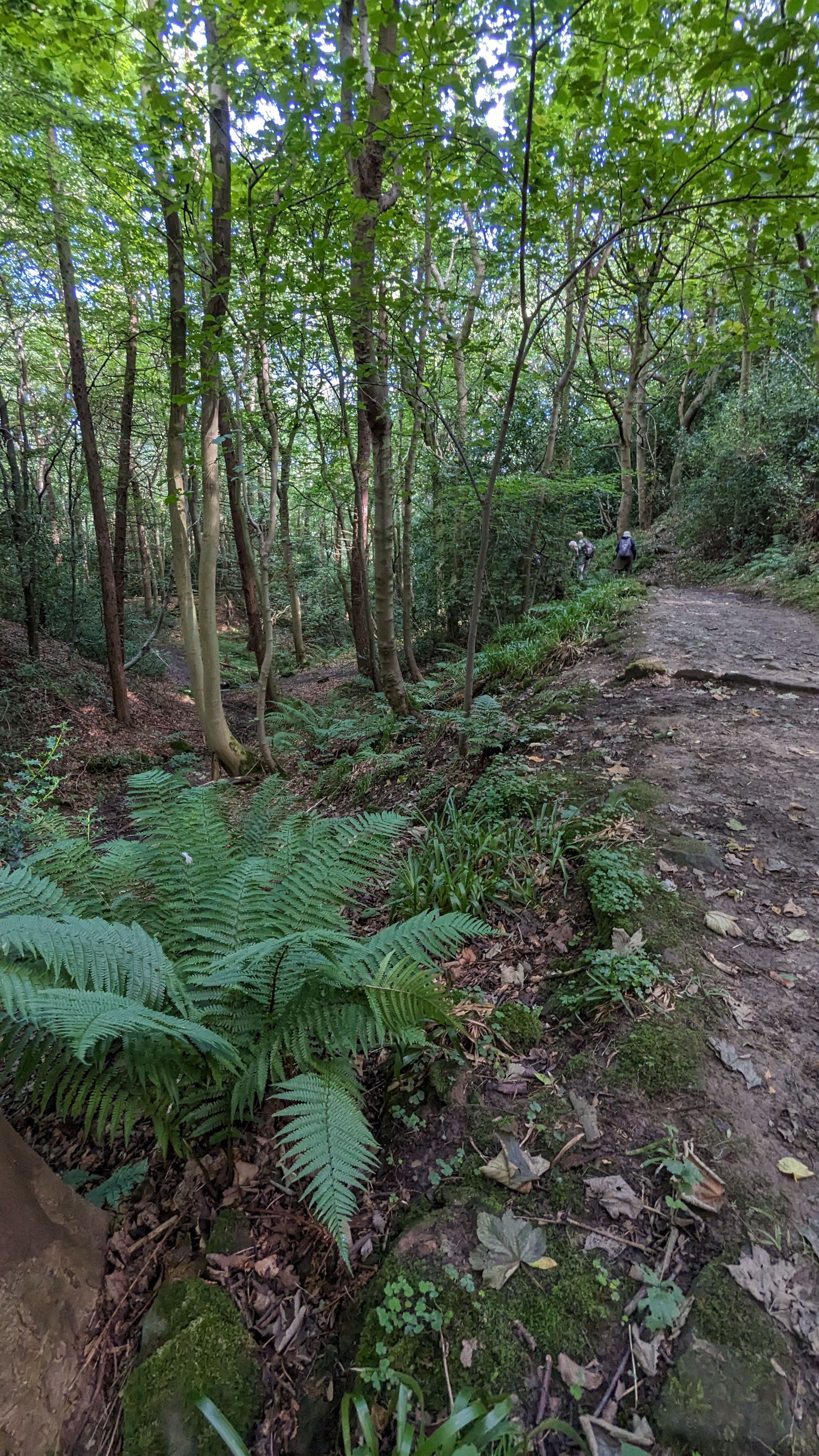
Trees are clothed on mosses and liverworts.

I have my pack lunch by the stream, looking at the bay. The stream is in spate, the waterfall magnificent, but this means the stream is hard to cross at the beach, so I can't access the Dark Bush-cricket spot. Not that it matters, it is a cloudy, cool day, so they are unlikely to be active.

Little Egret.

Hayburn Wyke.

The waterfall.
There seems to have been landslides on the right hand side of the cliffs.

The beck from the path.
Jay.

Tiny toad crossing the path.
I walk up the path to the Inn and have a hot drink before taking the Cinder Track towards Cloughton, and get my bush back.
Joining the cinder track back to Cloughton.
The wetland on the way, two Wigeon flew up and a Water rail called from the rushes.
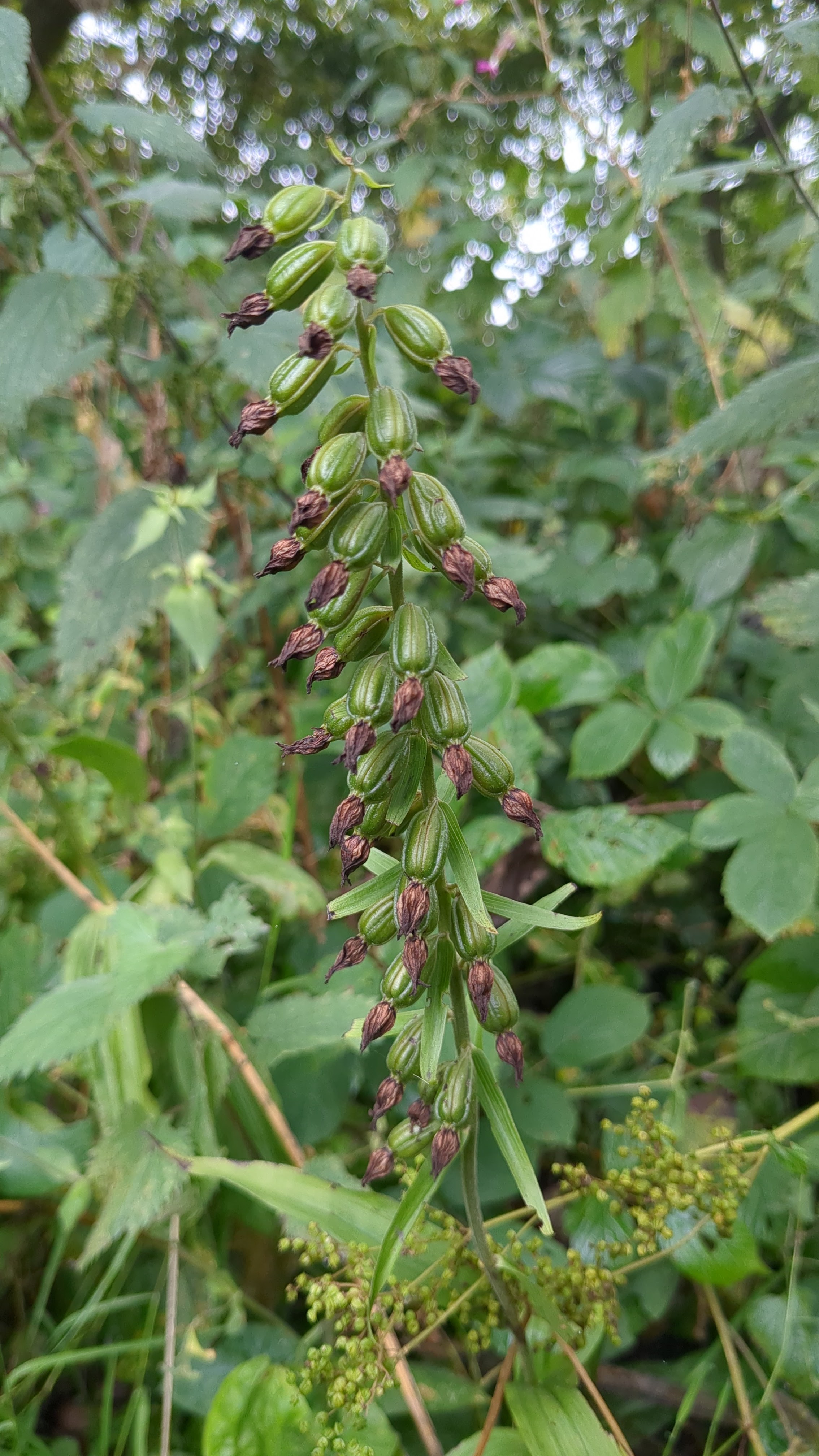
Broad-leaved Helleborine.

Saturday, 26 August 2023

Hayburn Wyke and Ravenscar

I was very keen to return to Hayburn Wyke after last years visit with Hull Nats, so I got a lift to join a trip by the Fern Group today. The weather forecast was changeable for the weekend, with rain and thunderstorms predicted for the afternoon. We were lucky the weather held on and we enjoyed a pleasant temperature, barely any wind and plenty of sunshine. It was lucky, as my main aim for the day was to record Dark Bush crickets and I had taken the bat detector to check for calling males.

Kite-tailed Robber-fly on the car park.

First, we took the path down the ravine. The ferns look magnificent, much larger than the sizes we are used to. Soft Shield Ferns are plentiful, as are Hard Fern. We saw some Lady Ferns too. We didn't come all the way down to the beach, just to the view point near the wooden bridge at the end of the trail. We were supposed to be following a trail along the beck, but somehow we lost it and it was like being in a ferny and boggy jungle. Anyhow, it was a great adventure going 'off piste' within the wood. Hayburn Wyke wood feels like a temperate rainforest. 

Lady Fern.
Soft shield fern.
The path to the beach.
The first viewpoint to the little cove.
A racing pigeon had decided to spend the day at the beach, enjoying the sunshine.
Devil's-bit Scabious with Common Carder Bee.
Spot the Slow Worm.
View of the head.
Slow Worm.

Sericomya silentis, the Bog Hoverfly, a lovely, large hoverfly typical of moorland and woodland clearings.

Female Dark bush-cricket. Three were basking near each other at the base of a south-facing hedge, where males were also calling. On a different field after lunch, also from a hedge, I picked two male calling. It appears the Hayburn Wyke population is doing quite well.

The beck.
Our lunch spot.
Leopard slug.
Ferdinandea cuprea. An uncommon woodland hoverfly. 

After the adventure in the woods, we decided to pop to Ravenscar to enjoy the view and have an icecream. I switched on the bat detector, hoping for Dark bush crickets, but, surprisingly, I picked a Long-winged Conehead calling, which I couldn't locate, in the field just by the car park (below). After a walk to the fantastic viewpoint towards Robin-hood's Bay down the hill (top shot), we returned to the car, but Roland immediately spotted the calling conehead when I pointed the area where it was calling! I check at home and this is the second most northerly record of Long-winged Conehead, and only the second from VC-62.

Conehead field.
Long-winged Conehead.

Common Green Grasshopper.

Sunday, 11 September 2022

Hayburn Wyke with Hull Nats

A Saturday outing with Hull Nats to Hayburn Wyke in North Yorkshire. We had a downpour when leaving Hull, but the weather kept improving and we had a mostly sunny afternoon with barely any wind. My main aim for the day was to try and see Dark Bush-crickets, which have their most northernmost outpost on the east coast in this sheltered cove. We did a circular walk, starting at Hood Lane, walking north on the old railway line from Scarborgouh to Whitby, the Cinder Track, then going down on the steep track to the cove, where we had lunch and returning by the Cleveland Way. Our glacial pace of advance along the Cinder Track was a sure indicator of the rich flora of the area. Bird wise, we came across several Marsh Tits and two Treecreepers in mixed species flocks.

A Wigeon and a Teal were feeding in a wetland by the Cinder Track.

We descended into the ravine that ends in the cove. Wyke comes from vik, meaning bay or inlet in Old Norse (as an aside, this word also gave name to the old settlement at the mouth of the River Hull now known as the city of Hull). The banks of the ravine are otherwordly, clothed by a damp woodland with a profusion of ferns and mosses. It is a magical place, reminiscent of Danes Dyke but at a larger scale. The trees are not particularly old, as they were felled during WW2, but the National Trust, who now owns the land, is restoring the woodland. We descended the steep path to the cove, which are well maintained, often with stone steps.


Eventually we heard the noise of the breakers and we emerge at a small cliff, where the creek ends in a small waterfall and a boulder and pebble beach. I had been pulling ahead to try and get to the beach during a sunny spell. I had been told that the Dark Bush crickets favoured the SE facing slopes covered in scrub and woodland, so I headed to the bottom of the scrub on the beach.

The waterfall onto the beach.

My first attempt at checking the base of the cliff vegetation ended in failure. It was tricky to search for anything while navigating the boulders. But then, Bill Dolling reached the cliff and said 'I'm sure that's where they are', and within a couple of minutes he pointed at one, clinging to a stem of grass.


My first Dark Bush Cricket.
The individual, a male, posed patiently for us.
From a distance, their colour pattern, size and general shape are reminiscent of a young toad.
The second male we saw.
I was very pleased to spot this Common Lizard at eye level at the base of the cliff.

The Dark Bush cricket colony location. I imagine they must be common in many other areas on the cliffs, but they are very steep and mostly inaccessible.
Hayburn Wyke beach
The cliffs look very wild, clothed in lush vegetation.
Flowering Wood Vetch, Vicia sylvatica
The beautiful foliage of Wood Vetch.
This hoverfly, Leucozona glaucia, a new species for me.

Field Grasshopper, Chorthippus brunneus.
Comma, the only one we saw. There were plenty of Speckled Woods and a single Holly Blue.

An inaccessible shelf on the cliff.
Cloughton Wyke and Scarborough Castle in the distance.