Showing posts with label fishing ponds. Show all posts

Tuesday, 4 August 2026

Holderness: Garton, Fitling, Humbleton and Sproatley

This is the last of the planned walks of the Holderness series. A warm day with an easterly wind and wispy high clouds, I get the three buses to Garton, actually four, as just short of the last stop, we are asked to leave the bus and board another one! At least it's a quick change and I get to Garton by 9:20, the earliest that can be done with public transport. I take back lane and then Humbleton Road towards Fitling. A Kestrel hunts from a stack of straw bales, whilst a young Buzzard calls over a copse. 

Kestrel.
A promise of a cofe turns to nothing, as the Spotted Duck cafe is not open on a Monday.
Black Bryony, their heart-shaped shiny leaves obvious on the hedges along the route.

The hamlet of Fitling sits between two minor single track roads, connected by a third. I take the route around the hamlet, which includes a caravan site, fishing ponds, stables and farms. Swallows and House Martins fly about. House Sparrows have a dust bath on a rough track. There is a flock of about 50 Rooks with a few Jackdaws and a Greylang feeding on a grassy field. Many young birds are more obvious than the adults: Robins, Whitethroats and Pheasant. This time of the year, with adult birds moulting, they tend to stay out of the way. 

Painted Lady.
Moorhen on fishing pond at Fitling.
Young Robin.
Chaffinch.
Rooks.
The arable fields are all harvested, the straw in bales or stacks.
Returned Common Gull.
Young Pheasants.
The single track road heading north towards Humbleton Road.
Adults and young Swallows.
Linnet.

I follow the road to Humbleton. It is getting to the middle of the day and the tarmac increases the feeling of heat. It is not too busy, which is good. The fields feel parched and there is not much of interest. At Humbleton, I head for St Peter's Church (top shot). The churchyard is very inviting, the lovely gate opened, Feral Pigeons and Jackdaws call from the church tower. I have my packed lunch sitting on one of the niches in the shade of the church, watching Migrant Hawkers hunt by the trees.

A lovely set of well kept cottages.
And one in need of TLC, the front door covered on an overgrown cotoneaster. 
A wonderful tree as I leave Humbleton.

I take Lelley road, which is not too busy, and I'm relieved at the sight of the bridleway sign, which meanders along ditches and fields all the way to Sproatley. I check the time, I'm making good progress to catch my bus to Hull. I have a bit of time, which I spend on the churchyard at Sproatley and the field just south of the church.

Bridleway sign from the road.
The view from the briddleway.
Ruddy Darter.

A pond with Bullrushes is the home of some Reed Buntings.
Friendly horse on a paddock near Sproatley.

I welcome the sight of this bench on the outskirts of Sproatley.
Looking back from Sproatley.
A dead mole on the path.
A Migrant Hawker landed for a quick rest near Sproatley Church.
And this is the end of this series of walks celebrating south Holderness and its wildlife. I will link back to these walks when I walk in the area in the future, which I most certainly will do!

Tuesday, 7 September 2021

Foredyke Green Pond and Noddle Hill

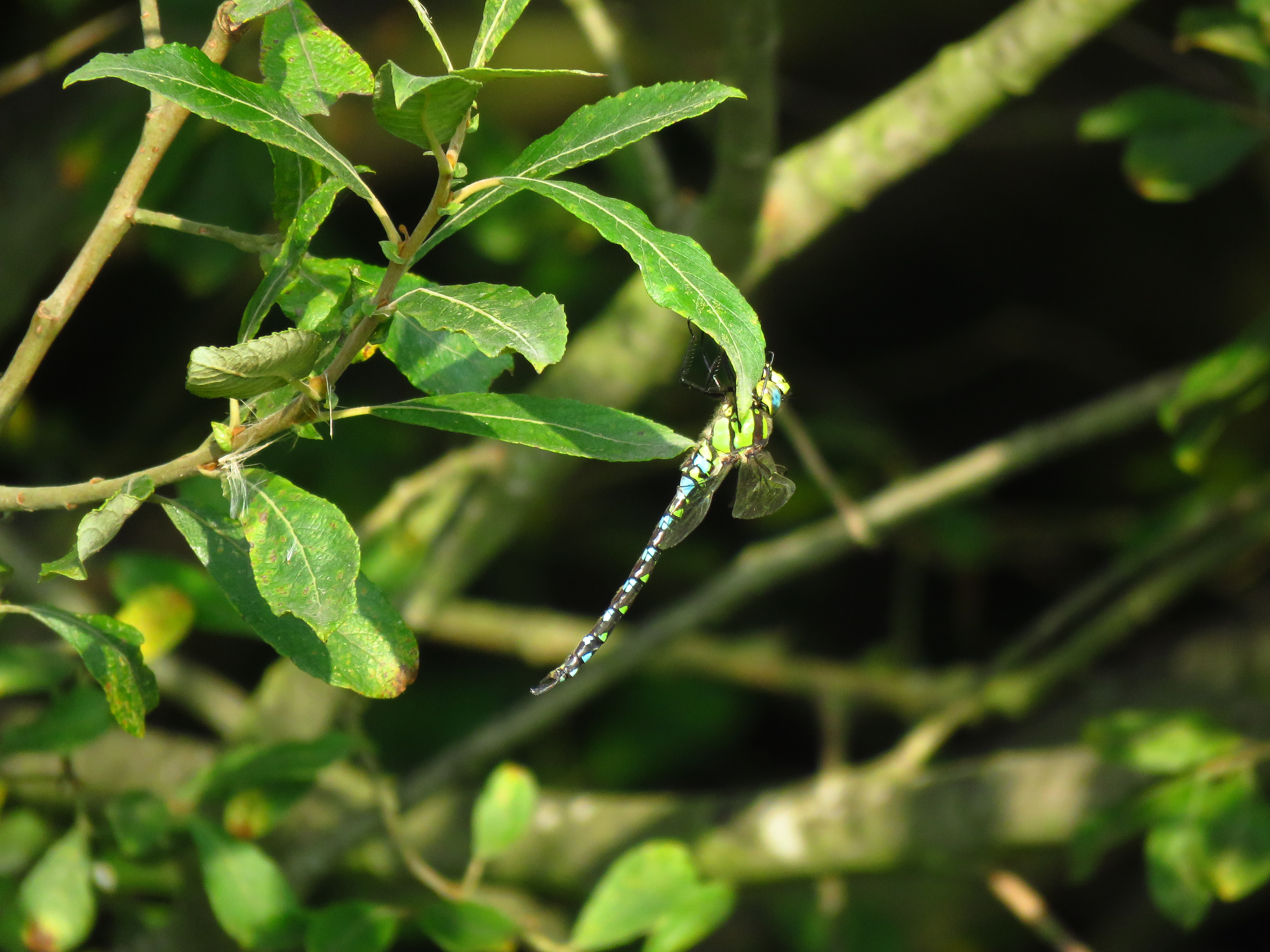
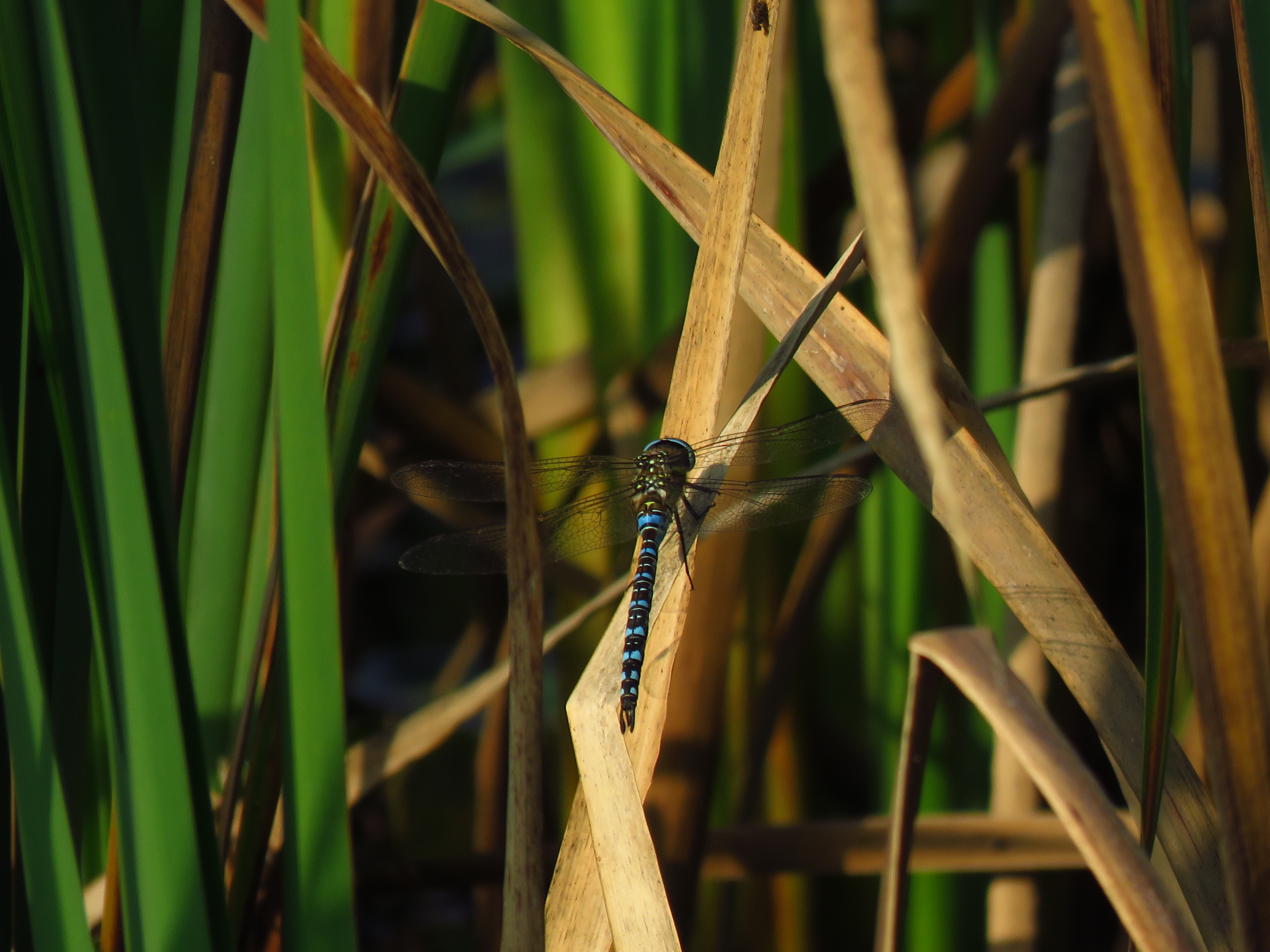
It had been a while since I had visited Foredyke Green pond, a sunny, hot day, I decided to visit. I would then walk to Noddle Hill for the rest of the trip. As I arrived a Southern Hawker male was patrolling. As I walked around the pond, it became apparent that there were three males, with clashes every time they met, almost like Emperors, although they keep to the shoreline vegetation. One of them rested for a little while.
Male Southern Hawker.
A female Migrant Hawker hovered over the marginal vegetation, she started ovipositing on a log, moving to different locations.


Several males were also about.
After a while, I walked to Noddle Hill. Common Blue Damselflies were by the NW entrance path. 

A flock of Common Gulls loafed on the playing fields.
The fishing lake had barely any floating vegetation and even the marginal vegetation was quite sparse in places. There weren't many dragonflies about. I searched for willow emeralds on the trees, unsuccessfully. I looked in the Emeralds pond, but there were none. I moved to the pond-dipping pond. There I found a snail killing fly.
A Snail Killing fly, Ilione albiseta I think.
And I was nicely surprised to find a terrapin, basking with rear legs outstretched, seal-style. It must have moved from the lake.
A blue-tailed damselfly oviposited in the main lake. Migrant Hawkers and Common darters were also around.
Blue-tailed Damselfly.
I returned to Foredyke Green. I walked around the pond.
Eristalinus sepulchralis, a spotty-eyed hoverfly.
I had checked the willow in the early morning, so I was surprised to find a male Willow Emerald, near it on some yellow flag leaves. A new site for Willow Emerald in Hull!

Male Willow Emeralds are brilliant for photos, they just pose. I experimented with different backgrounds.


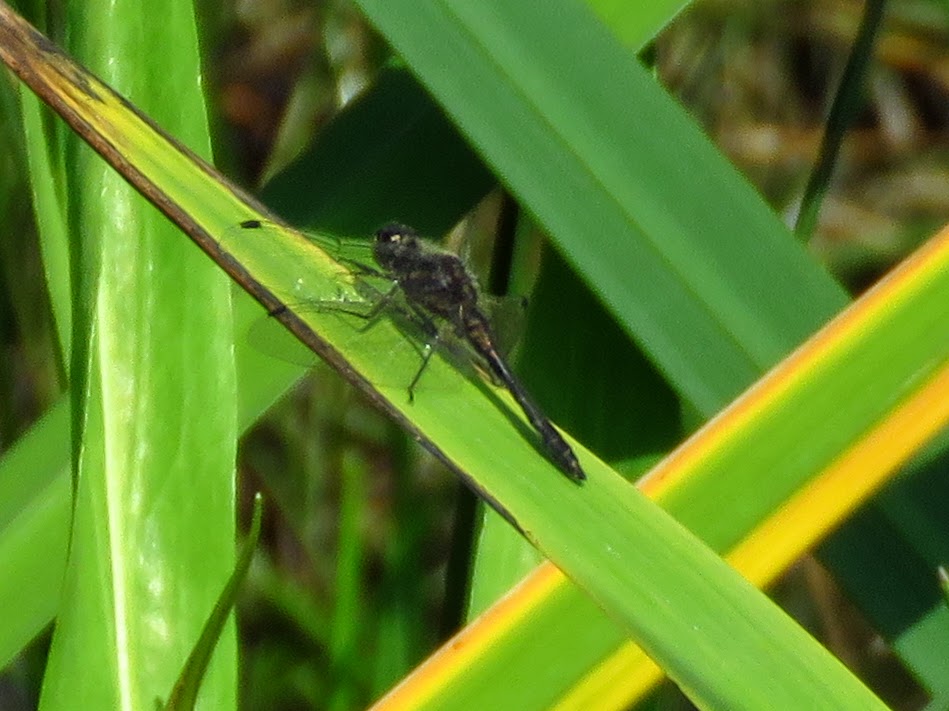
As I was photographing the willow emerald, a male Black Darter landed nearby. My first Black darter in Hull! I scrambled for photos, but I managed a single one in focus before a Ruddy Darter male flushed it and it disappeared. I couldn't find it again unfortunately, but what an amazing surprise!
Black Darter.
Common Darters were out and mating.
A Brown Hawker female was ovipositing.
Here is the Ruddy Darter that scared the Black Darter. They are stunning!
I had to go back home for lunch, but I returned in the afternoon to the pond for more.
The male Willow Emerald was near the willow, closer now to the shore, following the sunlight.
Blue-tailed Damselfly.
Female Ruddy Darter
This area of the pond had Ruddy Darter, Willow Emerald, Common Darter and Black Darter. A Southern hawker patrolled.
Another view of the male Willow Emerald.
It was clear that the Black Darter was gone for good. I decided to visit the Midmeredales pond. Despite being very full earlier in the year, it was completely empty and dry.

I found a Slender Groundhopper, an insect often found in damp places.
Lesser Marsh Grasshopper.