Showing posts with label insects. Show all posts

Friday, 14 April 2023

Spring at Sculcoates

We've had a very cool, wet and windy Spring so far. This morning, it was still cold, but sunny and no wind, it felt like one of those wonderful spring days when anything can turn up. I headed to Sculcoates, first to Fountain Road, then along the drain and to the Northern Cemetery. It started very well, with a Swallow on territory by the bridge, my first this year. It sat for a while on the aerial where the Swallows gathered before migration last year. Chiffchaffs and Blackcaps were singing along the drain and at the cemetery too.

The first Swallow

I headed north by Bridlington Avenue, where I found some surprising megafauna. There are some stables nearby and I first thought one of the horses had escaped. Then I noticed they were chained. Fly-grazing ponies are a regular feature of Hull. I personally like to see them around, but I'm more used to seeing them on the banks of the river Hull. These two were grazing on the fresh grass on the road verge.

Ponies.

Blackcap singing.
Song Thrush singing.
Greenfinch with nest-lining material.
Hairy-footed Flower bee briefly resting after patrolling a patch of white-dead nettle.
A hawk-like call attracted my attention, when I focused the camera on the calling bird it turned. up to be the lone Jay atop a poplar by the drain. It took off with a harsh call and flew north-east.
Jay.
Coot on nest. Coots have a funny way of resting, instead of tucking their head under a wing, they sometimes just drop their heads sideways, like meerkats falling asleep.
As I crossed Sculcoates Lane, I heard a Willow Warbler singing, my first of the year. It alternated feeding and singing.
There was some fight amongst crows by the railway line at the back of Abbey Way, then a mammal running away. It was a Roe Deer, which stood watching me, and bolted when I lifted my camera.
It was a good day for invertebrates, with many bees and hoverflies about. Three Small Tortoiseshells fed on dandelions.
Andrena scotica?
Nursery web spider amongst the primroses at the Sculcoates Cemetery.

As I headed back, I heard a Reed Bunting singing from the other side of the drain (top shot). This is the first reed bunting I see at Sculcoates, I've always been surprised by their absence in the area, despite apparently suitable habitat.
Male Reed Bunting.

Saturday, 16 July 2016

Cloudy North Cave Wetlands

A not very promising trip returning to North Cave to retrieve a fleece jacket I left behind on the heat of last Monday turned into a very nice visit. The sky was cloudy with no hint of break in the clouds, and quite cool. I walked anti-clockwise, and I my first hide stop at East Hide I spotted a slumbering pair of Mediterranean gulls, their sharp black heads with white eye rings tucked under their clean white wings and larger size made them stand over the hundreds of Black-headed gulls, many now with full grown chicks. After a few minutes, the Mediterranean gulls woke up, stretched and bowed to each other calling, giving some nice views.


 On the path to Turret Hide I found this fully grown Garden Tiger caterpillar on a walkabout.
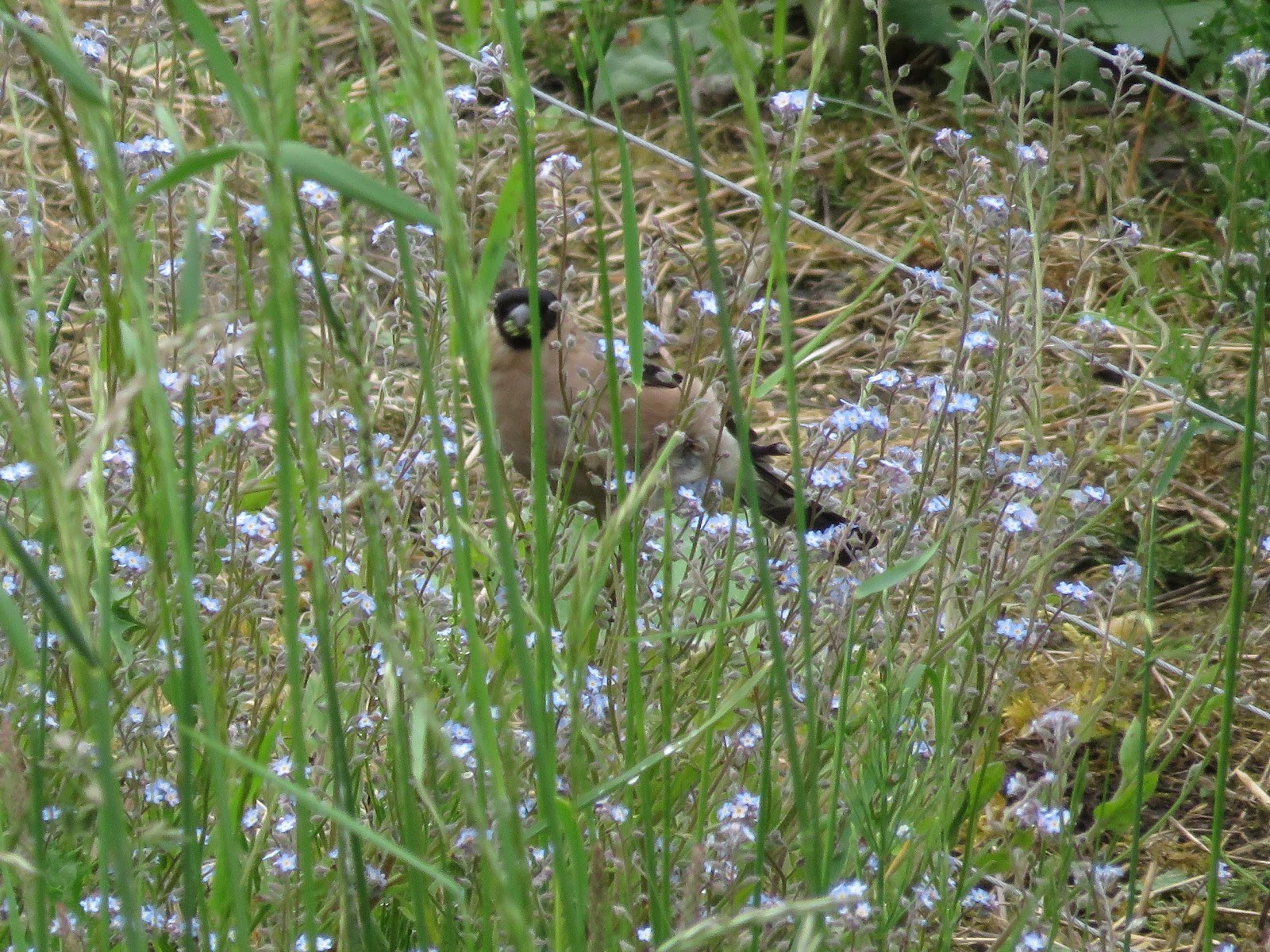
 From the hide, a pair of Bullfinches were feeding on the seedpods of Forget-me-nots, something I've never seen them do before.

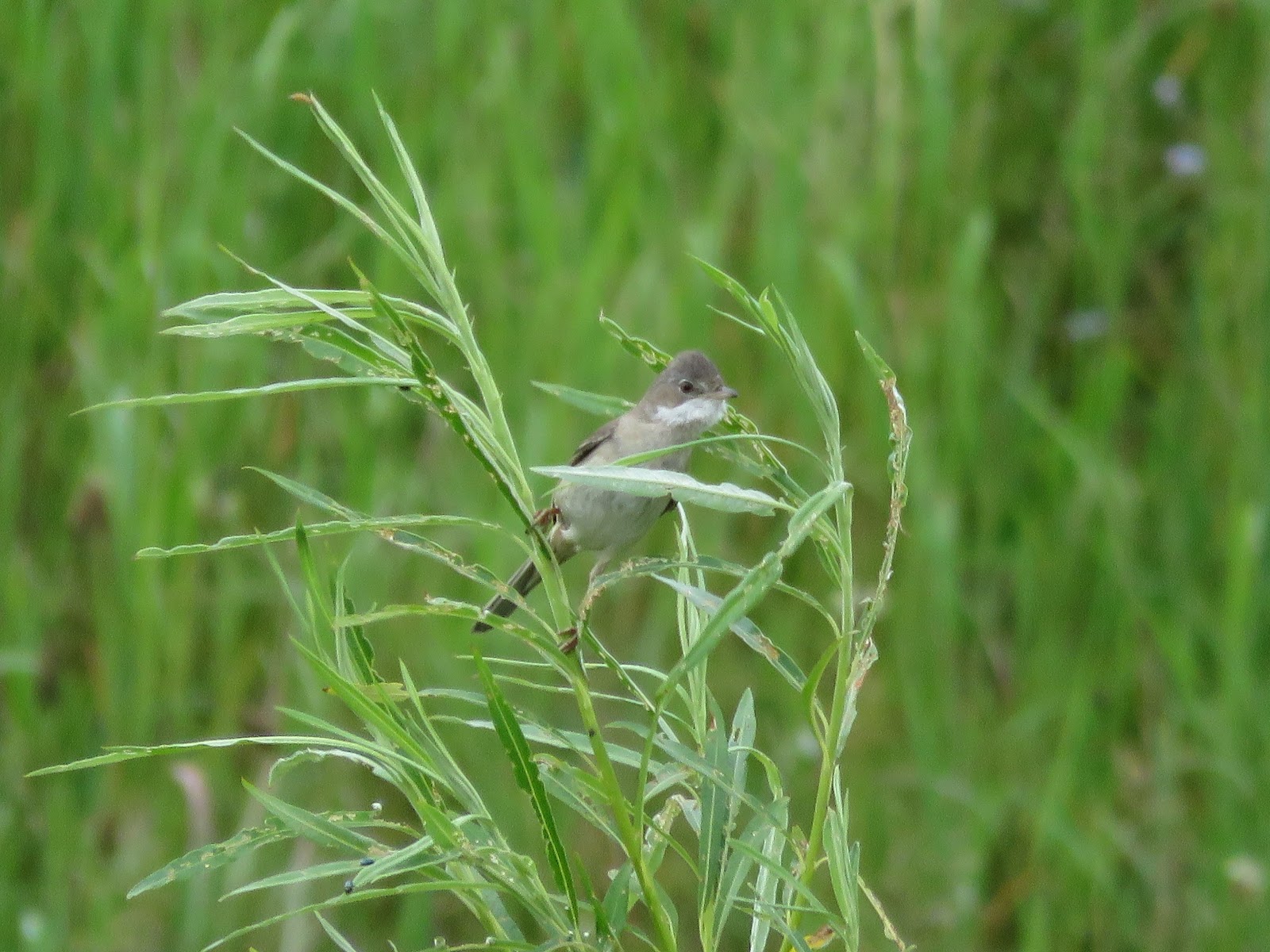
There were several male Reed Buntings singing around the reserve. The one on the top shot let me get really close, about two meters, and I could photograph it to my heart's content. This Whitethroat by Turret Hide sung atop a willow where a Reed Bunting had done previously.
 In the distance I saw a Shoveler with ducklings. The pair of Shelduck with young were sleeping across the lake, so I couldn't count how many ducklings were left.
A distant shot of a Female Shoveler with young.
 On my way out, I noticed weird jelly-like blobs on the side of the path. Thanks to Chris Drudge and Phil Gates on Twitter, which identified it as colonies of the cyanobacterium Nostoc. Apparently they can appear on ground after heavy rains although they are more commonly seen in lakes.
Nostoc colonies
As I walked along North Path, I saw a Green Woodpecker. It appeared to be bothered by something in its bill, and kept shaking it and swiping it, unsuccessfully. In several of the photos the bill is half open, giving the impression to have a Trichomoniasis infection. It hopped along and disappeared behind the hedge.
 There were many, many species with chicks in the reserve. This, a Blue Tit fledgling on North Hedge, stretches before joining her parents.
 Here, a Gadwall female with her ducklings.
 A number of Lapwing with chicks about, engaging in mobbing other birds around. This one, a male, in a few minutes of peace on the fields.
 As I turned the corner of far lake, invertebrates suddenly became more obvious. The following are a selection
Tetragnatha
Millipedes on bramble flower.
Common Blue Damselfly
Poecilobothrus nobilitatus


Willow Warbler
Araneus diadematus spiderling ball
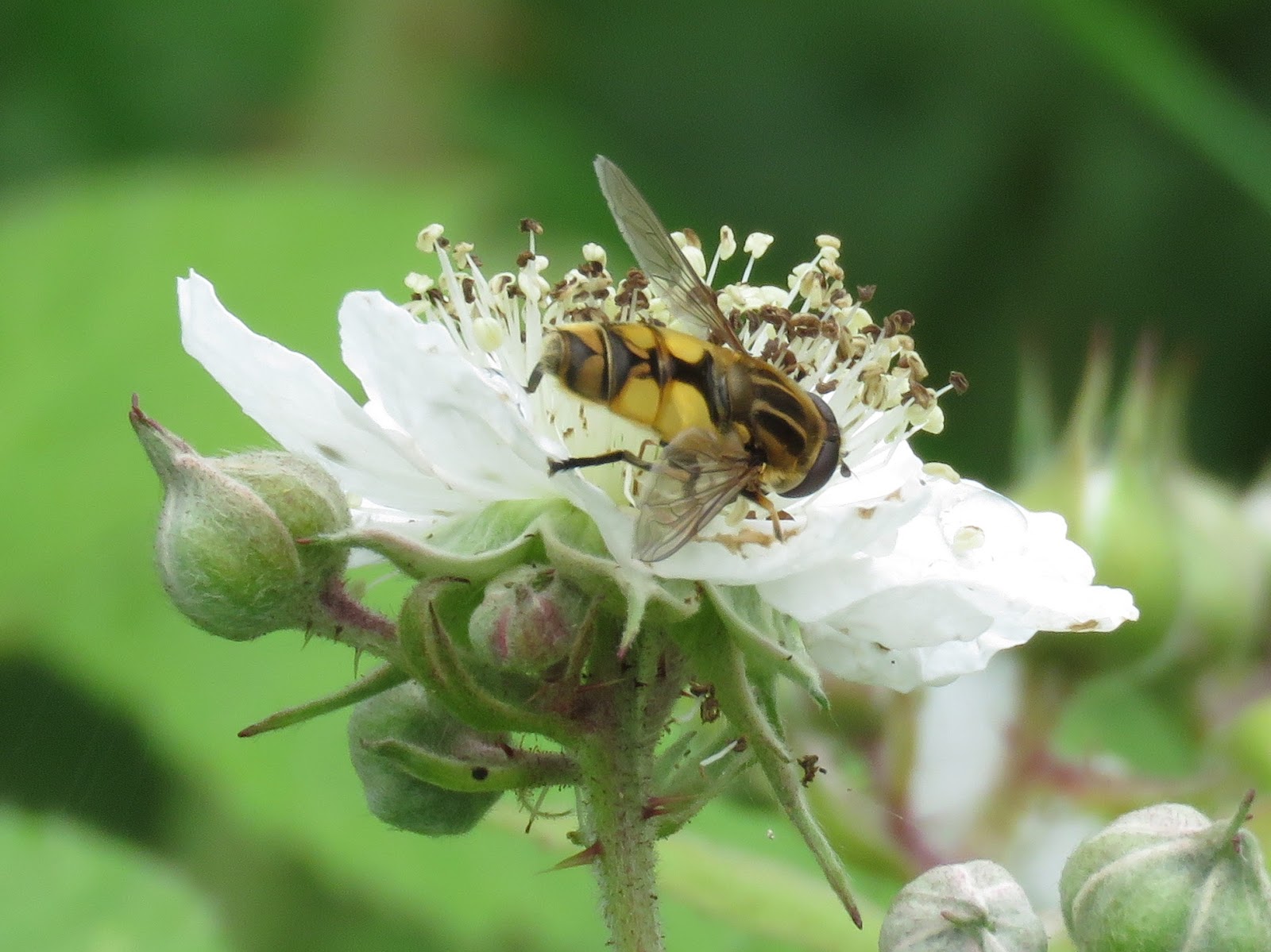
Helophilus trivittatus.
Sawfly
Salticus cingulatus. Note the iridescent marking on abdomen.
Salticus cingulatus
Nemophora degeerella.

Red Kite over the viewing area.
Mute swan being mobbed by Black-headed gulls.

Wednesday, 18 May 2016

South Landing in Spring

Five months after my trip to South Landing, I visited again on Monday. The forecast was cloudy, but it was a pleasant surprise to see that it was actually warm and sunny, with some very light high cloud and no wind, a perfect day to see insects on the cliffs. In the car park there were many singing birds, including Chiffchaff, Willow Warbler, Yellowhammer, Whitethroat and Blackcap. The morning to come was forecasted by a Hairy-Footed flower bee feeding on borage by the visitor centre.
Female Hairy Footed flower bee, Anthophora plumipes.
Whitethroat singing.
At the beach, the tide was quite low, but rising and the sea as flat as a lake. I walked west on the sandy strip at the base of the cliff and then on the exposed rock, as always, marvelling at the enormous size of the exposed limpets. Three fulmars circled the cliffs, later settling on a shelf. A male Pied Wagtail, possibly nesting nearby, posed briefly on a rock.
Pied Wagtail
Chattering Fulmar pair.
Herring Gull looking alarmed.
I then returned to the landing higher up, right on the base of the cliff, and it bas buzzing with Tiger Beetles, Cicindela campestris. They are tricky to photograph with the sun blazing on the white of the chalk, so I used the flash to try and remove the strong shading. If you approach slowly and don't make sudden movements, you can get right to them with a bit of luck.


 I spotted some mating pairs quite high on the cliff, but later a pair was on the clay at head hight. I laid low hugging the rock and got this face on shot, showing how the male grips the female with his jaws when mating.

There were plenty of bees nesting on the cliffs. Some hairy-footed flower bees, many cleptoparasites, including nomad bees and ruby tailed wasps. This is the area with plenty of Tiger Beetles and bees.

I think this is a Halictus rubicundus.
A Nomada marshamella.
A mining bee, possibly Andrena nigroaenea.

I walked east from the landing. A pair of carrion crows fed on the beach, quite undisturbed with my slow progress up the beach.
A very nice surprise was the thriving colony of Sand Martins, according to the local Pat, due to some cliff falls exposing clay over the chalk. There were at least 10 pairs flying about.
A view of the new Sand Martin colony.
A sand martin on the cliff.
Another surprise was my first Marsh Harrier of the year, flying over.

Many butterflies on the wing: Several Wall Browns, two Peacocks, many Green-veined white, a Red Admiral, a male Orange tip, and a Speckled Wood on the ravine. 
Wall Brown enjoying the dandelions.
Speckled Wood.
Green-Veined White.
Another Wall Brown.
Nomada flava (likely) on daisy.
Yellowhammer by the visitor centre.
After photographing the walls on the landing itself, as I was having lunch, I made my way up the cliff and around the ravine before heading home.