Monday, 23 January 2012

East Park in January

 I've been to East Park a couple of times this month, the second time was today, and I was intent on seeing the pair of Ring-Necked Parakeets which are now roaming wild in the park. We heard their calls but couldn't locate them. Still, it was a great day out as the wind had eased and it was sunny. Several flocks of Greylag were grazing as we arrived, keeping an eye for loose dogs (above). An early Treecreeper near the playground was a bonus, and the Goosander flock did not disappoint, mixed with many Pochards and Tufted Ducks near the island by the bridge.
 We became acquainted with a hybrid goose I spotted last time. It does not seem to have a partner and the other Canada Geese are hostile towards him/her. It is quite small and delicate, I wonder if it is a young of last year. There are Greylags in the park with obvious domestic ancestry (white patches). In the past (late 1990s) there were Chinese Swan Geese in the park and hybrids with Greylags but there are no traces of them now.
 Photos from today unless stated.
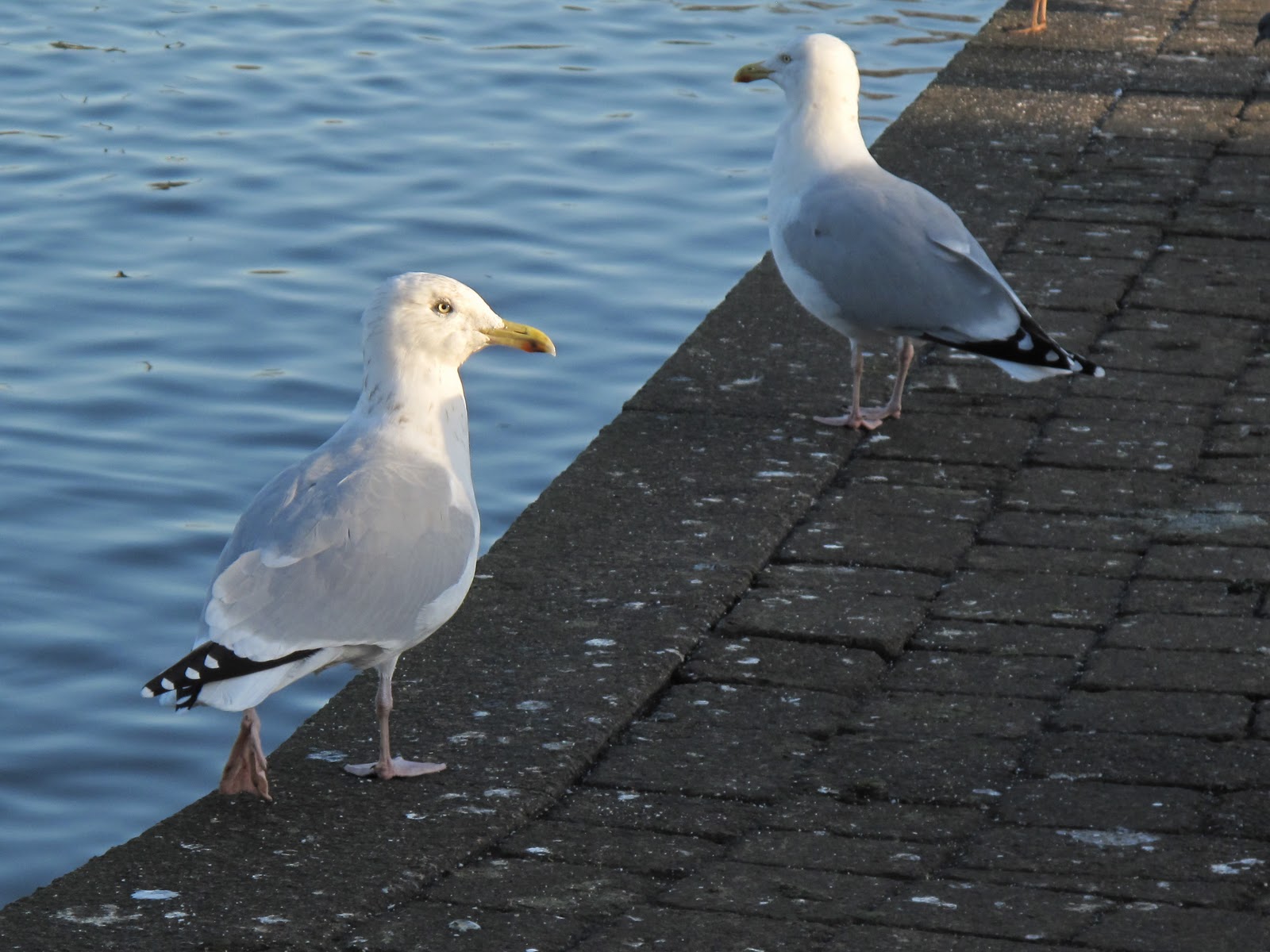
 Herring gull pair
Hybrid goose
Have you got any peanuts?
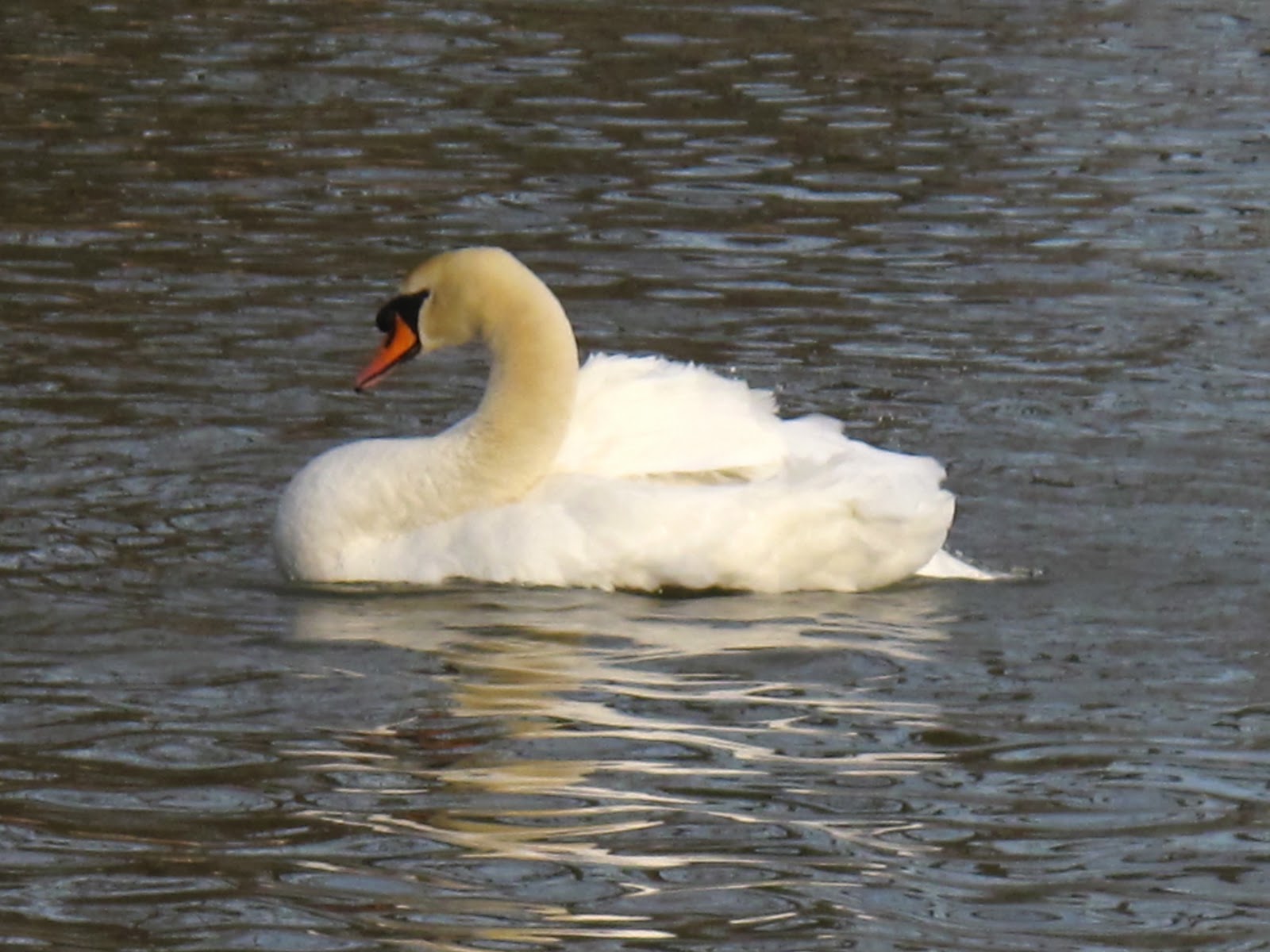
Bathing swan (photo 8/01/12) 
Male pochard (24/02/11)
Male Goosander (14/02/10)
Female Goosander (photo 14/2/10)


East Park


Species (number of visits) 8 Jan, 201223 Jan, 2012
Black-headed Gull (2)presentpresent
Blackbird (2)presentpresent
Blue Tit (2)presentpresent
Canada Goose (2)presentpresent
Carrion Crow (2)presentpresent
Chaffinch (1)-present
Collared Dove (1)present-
Common Gull (2)presentpresent
Coot (2)presentpresent
Dunnock (1)-present
Feral Pigeon (2)presentpresent
Goldcrest (1)-present
Goldfinch (1)-present
Goosander (1)-present
Great Spotted Woodpecker (1)-present
Great Tit (2)presentpresent
Greylag Goose (2)100present
Herring Gull (2)22
House Sparrow (2)presentpresent
Long-tailed Tit (2)presentpresent
Magpie (1)-present
Mallard (2)presentpresent
Moorhen (2)presentpresent
Mute Swan (2)11
Pochard (2)1present
Redwing (1)-present
Ring-necked Parakeet (1)-present
Robin (2)presentpresent
Starling (1)-present
Treecreeper (1)-1
Tufted Duck (2)1present
Woodpigeon (2)presentpresent
Total species: 322131

Saturday, 14 January 2012

Frosty walk around Oak Road Playing Fields

 After weeks of mild weather we woke up to a sharp frost and headed to Oak Road Playing Fields for a winter walk. The frost had dusted the fields and ice had formed on the shady side of the fishing lake, where Black-headed and common gulls didn't mind the low water temperature. Coots, mallards, tufted ducks and three Gadwalls completed the lake birds.
Gorse flowering
Gadwalls
Frosty grass
Tufted duck pair
View of the fishing lake


Bird list
  1. Black-headed Gull 
  2. Blackbird 
  3. Blue Tit 
  4. Carrion Crow 
  5. Common Gull 
  6. Coot 
  7. Cormorant 
  8. Gadwall 
  9. Goldfinch 
  10. Great Spotted Woodpecker 
  11. Great Tit 
  12. Greenfinch 
  13. Herring Gull 
  14. Lesser Black-backed Gull 
  15. Long-tailed Tit 
  16. Magpie 
  17. Mallard 
  18. Robin 
  19. Tufted Duck 
  20. Woodpigeon 
  21. Wren

Monday, 9 January 2012

The woodland cemetery

My local cemetery is now disused. The trees are well over 100 years old and there is a lot of old wood around. The neglect this cemetery suffered for a while meant that birds that like old woodland thrive here. Today we saw a Great Spotted Woodpecker flying away as we approached it, and then another one teased us later, flying from one tree to the next, but not allowing close views. It was while following the woodpecker that we came across this Treecreeper, a bird that I don't come across often, that feeds on the cracks and notches of trunks and branches. This one allowed us to get quite close, but it is such a cryptic bird that I was unable to take good shots. The one above is the only decent one I managed.
  Wrens, great tits, robins and song thrushes sung this mild January morning. Two robins went about their business close to each other, possibly already pairing.
This clump of snowdrops stood brigthly in a clearing.

Bird list
  1. Black-headed Gull
  2. Blackbird
  3. Blue Tit
  4. Carrion Crow
  5. Coal Tit
  6. Collared Dove
  7. Common Gull
  8. Feral Pigeon
  9. Goldcrest
  10. Great Spotted Woodpecker
  11. Great Tit
  12. House Sparrow
  13. Kestrel
  14. Long-tailed Tit
  15. Magpie
  16. Robin
  17. Song Thrush
  18. Starling
  19. Treecreeper
  20. Woodpigeon
  21. Wren

Sunday, 27 November 2011

By the Humber bank

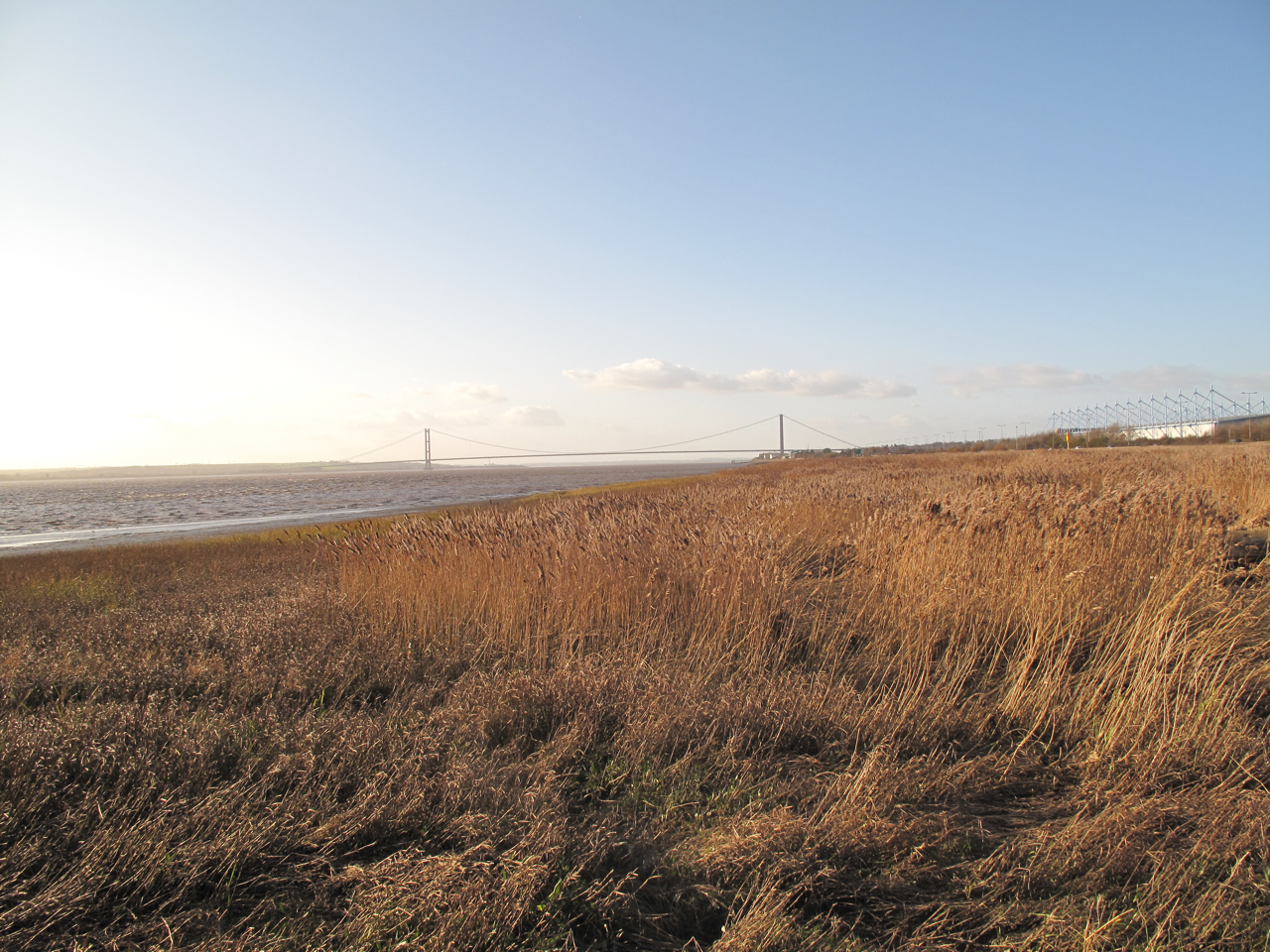
Next to the shopping center in St Andrews Key, by the side of the Humber, there is a path - part of the Trans-Pennine Trail - that will take you all the way to the Humber Bridge. Today, it was bright and mild, if a bit windy, and we only traced some of the way, just to reach a reed bed with wonderful views to the Humber Bridge. Surprising the number of wildflowers still around, daisies, ragwort, sow thistle, red clover and the occasional knapweed and yarrow, although from the latter there were plenty more dry seedheads. The wind played shushing sounds on the reeds, taking their seeds away. A few black-headed gulls tried to rob a crow of a tasty morsel it had got on the rippled mudflats, exposed with the low tide.
mudflats
Carrion crow with morsel
Carrion crow
Sloes
Elder lichens 
Elder

Location Map

View Larger Map

Sunday, 20 November 2011

Watching Grey Seal behaviour at Donna Nook

We went to see the grey seal rookery at Donna Nook today with the Hull Wildlife Watch group. While driving there it was so foggy we didn’t realise we were at the Humber Bridge until we got to the tills. We got to Donna Nook after just over an hour and a half. The car park was a quarter full, but very impressive for a foggy start of the day. Fortunately, the fog started to lift, and an hour later it was a glorious, mild still day. There were lots of seals (over 1000 pups born so far this year) and there were already some older pups with a new, grey coat.
 You are guaranteed to get a shot of a fluffy white seal pup if you come to Donna Nook at this time of year, but there is so much else going on. The atmosphere is incredible, the howling calls and snorts of the seals, their unique – intense, not unpleasant – smell wafting onto the dunes, and the ease with which you can watch a large, wild mammal behaving, completely oblivious to the attention to the hundreds of watchers and photographers a few meters away.
Grey Seal bull
cow
a watchful cow
Telling seals apart
Male seals are called bulls, female seals are called cows and the little ones are pups. Pups are easily told apart by their white coat and small size. Cows are pale brown or grey with dark blotches, while bulls are darker, chocolate brown, with paler blotches. Males are larger and have thick, creased and matted necks. Their muzzles and heads are also larger than females’. Bulls can weigh over 300 kg.
a cow (left) threatening a bull
things escalated a bit until the male -literally - rolled away
A cow and her pup

Protective females
Left to their own devices, female seals would rather be dozing all day, feeding their pups, but they need to keep a constant eye on their pup and other cows and bulls. They are very protective of their pups and aggressive towards other cows, with constant squabbles between females getting to close to each other’s pups. Females are also very aggressive towards males, fighting them vigorously with their claws and threatening them with open mouths, making them retreat and keep a safe distance from their pups, and fights can sometimes escalate.
Mating seals
Fighting bulls
Mating and fighting males
Grey seal males are in the rookery with one mission: to mate with as many cows as possible. Females become receptive around the period when they wean their pups. Bulls are not territorial, they try to find and mate with receptive females and they fight other males that get too close to their females of choice, so they do not really defend an area. Many males had reddish necks from fighting and there were some fights going on. I haven’t seen very long fights, after a few minutes, one of the bulls galumphs away, sometimes chased by the winner bull.
Pup
Nursing pup
Seals have this amazing control of their nostrils: they can close them at will, or they can breath only opening one of them as this pup shows.
Nursing and dozing pups
Pups only stay on the beach for a month or so. They are born quite high on the beach, out of reach from the high tide, covered on a white coat and looking quite thin. Grey seal milk is extremely rich (53% fat) so pups put on weight quite rapidly. They are weaned after just two or three weeks. Cows remain close to their pups, and do not feed while they are on the beach. After this short period of fasting, nursing and mating they go back to the sea, leaving the fat pups behind to their own devices. The pups will finish their moult, and spend some time on the beach before returning to sea.
Two lesser Greater Black-Backed Gulls feeding on an afterbirth
Carrion crows and gulls squabble for best positions at the carcass of a dead pup
Scavengers
Pup mortality is relatively low in Donna Nook (around 10%), and mostly happens due to desertion or accidental separation of mother and pup, and subsequent starvation. We watched how a group of Carrion Crows and Lesser Greater Black-Backed gulls fed on a dead pup. Carrion crows and gulls walked around in search of afterbirths, which they also feed on.

Conservation
The size of Grey Seal colonies in the North Sea is increasing steadily, so we are likely to enjoy the spectacle of life in a seal colony for years to come.
(figure from Harrison et al 2006) 1400 pups are predicted to be born in the 2012 season in Donna Nook.

Reference
P. J. Harrison, S.T. Buckland, L. Thomas, R. Harris, P.P. Pomeroy & J. Harwood. 2006. Incorporating movement into models of grey seal population dynamics. Journal of Animal Ecology 2006, 75, 634–645.

Monday, 24 October 2011

Yorkshire Wildlife Park

We spend the day in the Yorkshire Wildlife Park. There were lots of changes since we went on March 2010. The lion enclosure is open and there is a new tiger enclosure too. The lions were rescued from a dilapidated zoo in Romania, where they were locked in small cages. They must feel the relative freedom to roam in a large, open air, well vegetated enclosure with a lake and small hill. There is a bridge overlooking their enclosure, so you can truly be surrounded by 13 lions, which is a scary thought. Considering their past history, the lions look healthy and they were very active and interacting with each other, gnawing at some bones, or running from one end to the other when they thought they had seen some of the keepers. The pair of tigers, which are being kept in separate enclosures for now, are part of the Amur tiger breeding program. Their enclosure is on a slope with large oaks and a waterfall. One of them paced up and down non stop on a well trodden path, which was a bit disturbing. The kids really enjoyed watching the squirrel monkeys hunting flies up close in the walk-in South America enclosure, which also includes Maras and Capybaras. I found the camels very impressive, they look regal in their wooly coats, as opposed to the gangly dromedaries, and look beautifully sculptural. The lemurs did not dissappoint, and they dutifully sat in their loto positions enjoying the warm sun, and keep changing places to be in first row, blocking the sun to the second row! A tiny meerkat watched from its vantage point, while others dug tunnels or run around. A selection of shots from today follows.
Bactrian camel
Amur tiger
Mara
Squirrel monkey
Yellow Mongoose
Sunbathing ring-tailed lemurs
Impressive Ankole cattle
 Chapman's zebra

Vigilant meerkat
For more info click here.

Monday, 29 August 2011

Honeysuckle Farm

We spend the afternoon in Honeysuckle farm. There is plenty to do and see but the kids invariably spend most of the time jumping on the hay bales. The farm has a small woodland area with picnic tables and several ponds, two of them stocked with large carp. One of the ponds, which is quite new, is shallow and has a lot of natural aquatic plants. Young moorhens nibble in the water. Honeysuckle farm is great for dragonflies and butterflies. But today, a couple of water voles stole the show. They fed on the banks of the carp food quite happily - looking like they are very used to people - and once squabbled for the best spot, swimming from one side of the bridge to the other. We had great views for 15 minutes. I bet there are very few places around where you can feed wild water voles!
Female common darter, Sympetrum striolatum
Immature moorhen. 
Swimming water vole
Water vole nibbling carp food
Amphibious bistort
Male common darter
Bombus pascuorum on teasel

Location map


View Larger Map