Another still, mild morning starting misty, then some sunny spells developed. I walk to Oak Road via Pearson Park, Beverley Road, Ryde Street, and Clough Road and then walked on the bank of River Hull. Pink-footed geese call overhead, but I can't see them with the fog. I'm impressed they even leave their roosts with the little visibility. When the sky clear a bit I see a small skein of 11 flying East.
The new resident pair of Mute Swans at Oak Road Lake have successfully raised three young this year. They were incubating during the spring lockdown. I stop to give them some clover from the shore, which they love, but can't reach as there is no easy way out of the lake for the swans. A ramp would probably be welcome for the swans.
Grey Wagtail.
The river is flowing downstream with the tide, and its quite low, I walk towards the Croda factory. Two Grey Wagtails feed on the exposed banks, repeatedly crossing the river. A Redshank calls and flies away.
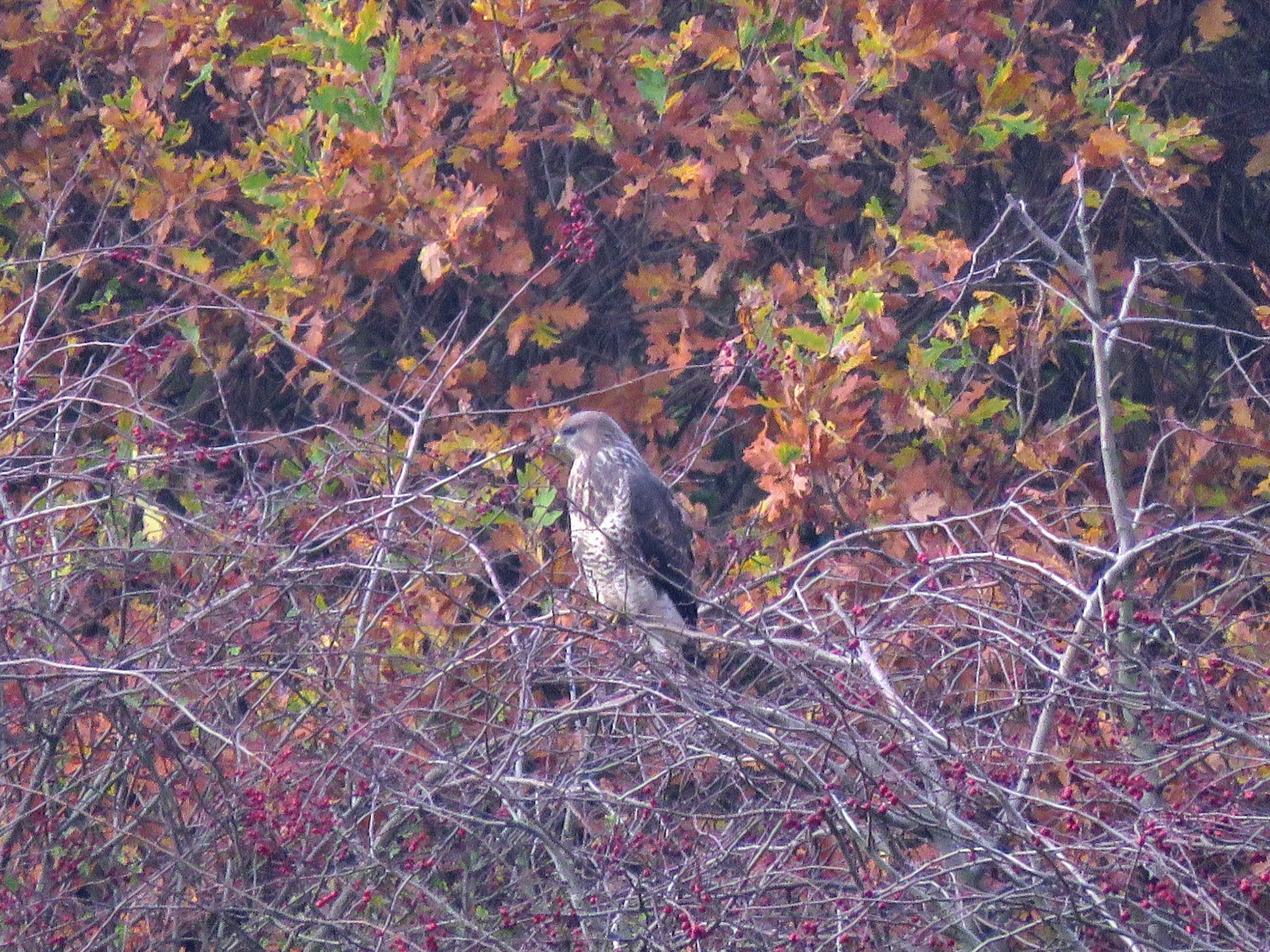
I spot a Buzzard sitting on a hawthorn, with two magpies keeping an eye on it.
Buzzard.
Buzzard and Magpie.
As I walk back by the lake, I hear a Cetti's Warbler singing at the lake. Cetti's warblers are a relatively recent colonist in East Yorkshire, first bred north of the Humber in 2006, after having started colonising the south of the UK from the early 70s. It has colonised Tophill Low, and North Cave Wetlands, and in the last few years it appears to have colonised the area around Oak Road, as I heard it in May singing from the Croda grounds.
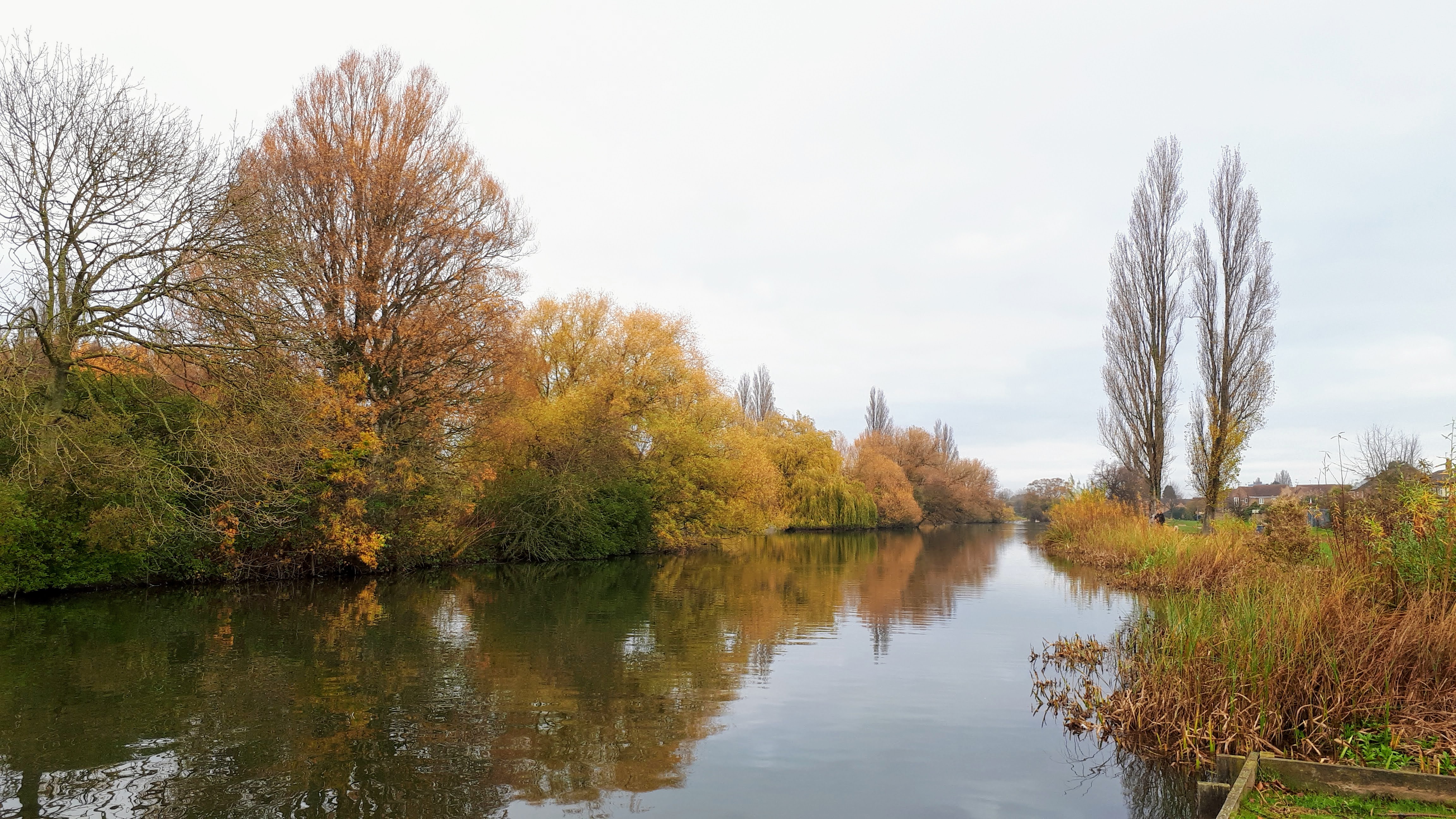
Path to the lake.
Cormorant over.
The cormorant flew around the lake, but didn't land.
Blackbird feeding on hawthorn berries.
On the walk back I come across this lovely street art, who doesn't love some house martins in November?
A still cloudy day that started less misty than previous days and noticeably milder. I took a walk to Pickering Park, about one hour away from home, passing through the General and Western Cemetery, Spring Bank West, to Anlaby Road through the pedestrian/cycle lane, and next onto Boothferry Road and a small foray to Peter Pan Park. Some of these areas I had last visited in the spring lockdown.
I take a mental note of the plenty of berry-laden rowan trees along the roads in case of a waxwing irruption. Pickering Park is looking splendid with the autumn colours. The occasional flock of Fieldares and Redwings fly high overhead, and also a large Woodpigeon flock. There are no Goosanders yet.
The extended Mute Swan family is spread around the lake. The two last years young are in the southern side of the lake, whereas two young from this year are in the northern side practicing their courtship skills. One of them eventually gets left behind and it utters its contact call. The third young of the year exercises its flight muscles while on the shore.
I watch a crow chasing a female sparrowhawk.
Collared Doves at Spring Bank West.
A Blue Tit feeding on horse chestnut leaf miner pupae.
A swan mussel shell near the edge of the Peter Pan lake.
A 100+ strong Woodpigeon flock in migration.
The cob Mute Swan.
The sun came out at about eleven, bringing out the colours even more.
One of two Tufter ducks at Pickering Park lake.
The Stock Doves are very tame at Pickering Park and come right next to me as I crouch on an area where people have left peanuts.
Shaggy scalycap, Pholiota squarrosa, cluster growing at the base of a willow.
A Mistle thrush 'frozen' as starlings and goldfinches take to the wing, possibly due to a Sparrowhawk.
As I walk back through the Western Cemetery, a Woodock took flight and flew around the trees. A very nice addition to my lockdown list and year list!
A misty day, I head for a walk on the cemetery. It is usually very quiet on early Sunday mornings. The cemetery feels lighter as many trees have lost their leaves, and the remaining ones are showing their structure. I'm impressed by a very large oak (above).
I spot a Stock Dove high on the trees. They are so easy to miss unless you know their characteristic song, usually timid and keeping to themselves in singles or pairs.
Stock Dove.
And then I see a Tawny Owl nest, with the Friends of the Hull General Cemetery initials. I hope the nest gets in use soon, there is definitely Tawny Owl activity as I heard and saw 3 individuals today at dusk. I spend some time in the afternoon reading the articles on the history of the cemetery in the Friends website.
I cross onto Western Cemetery, with its more open parkland. There is a large Whitebeam, but the remaining berries are harder to reach. Blue tits and Great tits appear to be feeding on berries. Two Mistle Thrushes are squabbling for possession of the whitebeam, and the Blackbirds are taking advantage, some hanging down from branches to reach them.
Mistle thrush getting some hanging berries.
Greenfinch.
A line of crab apples full of fruit.
Several Woodpigeons, including this young one, fed on holly berries.
This adult had a pretty full crop.
Before returning home, I take some photos of the autumn cemetery.
I took a long walk through town today. I decided that lockdown must start early, so I'm going to do an winter version to the spring lockdown series, in which I walked from home around Hull, recording breeding birds in complete Birdtrack lists (lockdown birding series). The rules are, only visit sites within walking distance, and trying to avoid the main thoroughfares to reduce social contact. Today's route took me through Pearson Park, to Sculcoates Lane, along Beverley and Barmston Drain, then to Freetown Way, Queens Gardens and along the River Hull from Drypool bridge and back through a similar route, but this time via Wilcolmlee.
Starlings socially distance atop an ornate railing on a rooftop at Beverley Road.
The forecast gave a chance of rain in mid morning, but this didn't materialise, instead the sky eventually cleared and it was quite sunny, which was a very nice bonus.
Blackbird bathing at Beverley and Barmston Drain.
Magpie.
Pied Wagtail by Lockwood Street.
Bullfinch bath time.
A 84 strong skein of Pink-footed Geese flying over Hull.
A flock of Long-tailed tits made their way across the drain.
A view of Queens Gardens.
Young moorhens foraging at Queens Gardens. Probably the same that were tiny chicks during the first lockdown.
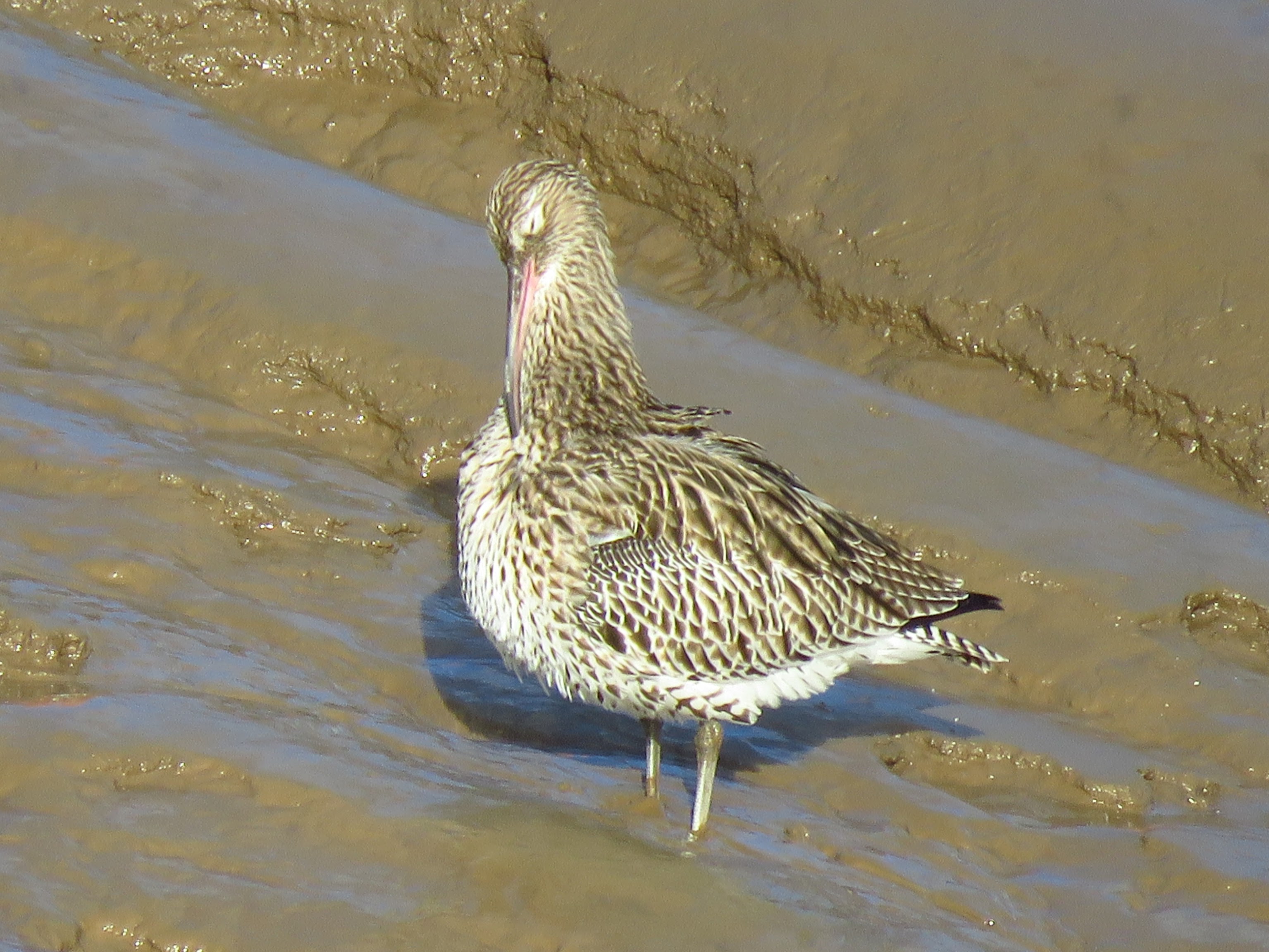
I'm always pleased to see a Curlew on the river Hull. Is it always the same individual? They are long-lived birds and they might favour a particular wintering spot. This time a Curlew was preening on the river bank by Scale Lane bridge and I could take its portrait with a nice light.
Hard to reach your chest when you have such a long bill.
There was about half a dozen Redshank. They were active and there was lots of piping. Two, including this bright individual, kept chasing.
Redshank.
These Black-headed gulls were involved in a pair bonding display including patting the ground and looking down with wings away from the body.
The saltmarsh by the River Hull at the Museums Quarter
There is a little green space behind the Charterhouse and I visited it on my way back. It is an old walled Georgian burial ground with mature trees, tucked away from view from Freetown Way. I was surprised by this Red Admiral alighting on the ground to bask in the sun. Goldfinches and Chaffinches fed on a London plane tree.
A Sparrowhawk gliding over the Beverley and Barmston Drain.
Featured bird: Curlew RED LISTED
An elegant large wader, with an extraordinary bill, that they use to Curlews are in trouble. Their populations have suffered strong declines, particularly the British breeding population. The mudflats of the Humber form an nationally important habitat for wintering Curlews, which visit us from Scandinavia and Russia. About 2,600 curlews winter in the Humber each year. From October to March, it is not unusual to find the odd Curlew on the mudflats just off the city of Hull, and near The Deep in the River Hull, where they can be observed at close range.