Tuesday, 4 March 2014

North Cave Wetlands in the sun

A fine day, sun shining and barely any breeze, we headed off to North Cave Wetlands. The raucous calls of the Black-headed gulls filled the air. From East Hide there were a fair number of species on view. A large flock of Wigeon fed on the island, with a few coots. Lapwing, Oystercatcher, Tufted ducks and a sprinkle of Redshank. A pair of little grebes laughed occasionally. We were to hear their calls all around the reserve, although not all the pairs were so visible. A pair of Swans were intent in shooing away a young one. One of them put on an impressive busking display.
A pair of Carrion Crows fed on some carrion on the shore near Turret hide.
 Me moved to Turret hide, were a birwatcher pointed us to the redhead Smew. She was much easier to photograph than last's years one in Far Lake, and seemed much more relaxed.
On the feeders by maize field, chaffinches and tree sparrows. Amazingly, a group of chaffinches are hunting insects hawking like flycatchers. With the mild day, there are clouds of flies in the air.
 As we walked on the north path, we witnessed a raptor which was struggling to subdue a lapwing. A gang of carrion crows kept their distance, although they gave an occasional peck. It was a Sparrowhawk, which proceeded to mantle the lapwing to protect it from the crows.
 In the distance towards the NW over the clouds there were five soaring buzzards.
A queen Bombus terrestris was nest searching by the north hedge, while a Skylark sung its song.
The sun make for poor birdwatching conditions in Reed Lake. We watched a flock of Siskin in an alder, but we couldn't locate any Redpoll.
 The construction work of new islands in main lake was underway, and the water level much lower. There were fewer birds than usual around. A large group of Oystercatchers were piping on the mudflats and two Redshank waded very close to the hide providing super photo opportunities. One individual had much redder legs than the other, and they had a little squirmish wing-flapping when they got close to each other.
 We had another session on Turret hide before leaving. The Shovelers were pairing up and they were very active displaying, feeding and threatening each other with quick honking calls, which reminded me of Gannets'.
 After the cloudy winter with poor photo opportunities I had trouble making a selection of photos for today's post.
Adult swan busking a juvenile, probably last year's offspring. 
Oystercatcher atop molehill
Redshank sunbathing? 
Lapwing pair and reflections
Shoveler and teal
Gadwall pair
Displaying gulls still moulting their head winter plumage
More BH gulls displaying
Male lapwing silouette
Sparrowhawk subduing lapwing prey surrounded by Carrion Crows 
The lapwing still flapping. The crows appeared wary of the sparrowhawk but they kept a very close eye on developments
The sparrowhawk mantling its prey, which protects it from being stolen away
Male Reed Warbler feeding on reed seeds
This could have been a great Siskin photo :-(
Flowering gorse on the west path
Oystercatchers piping
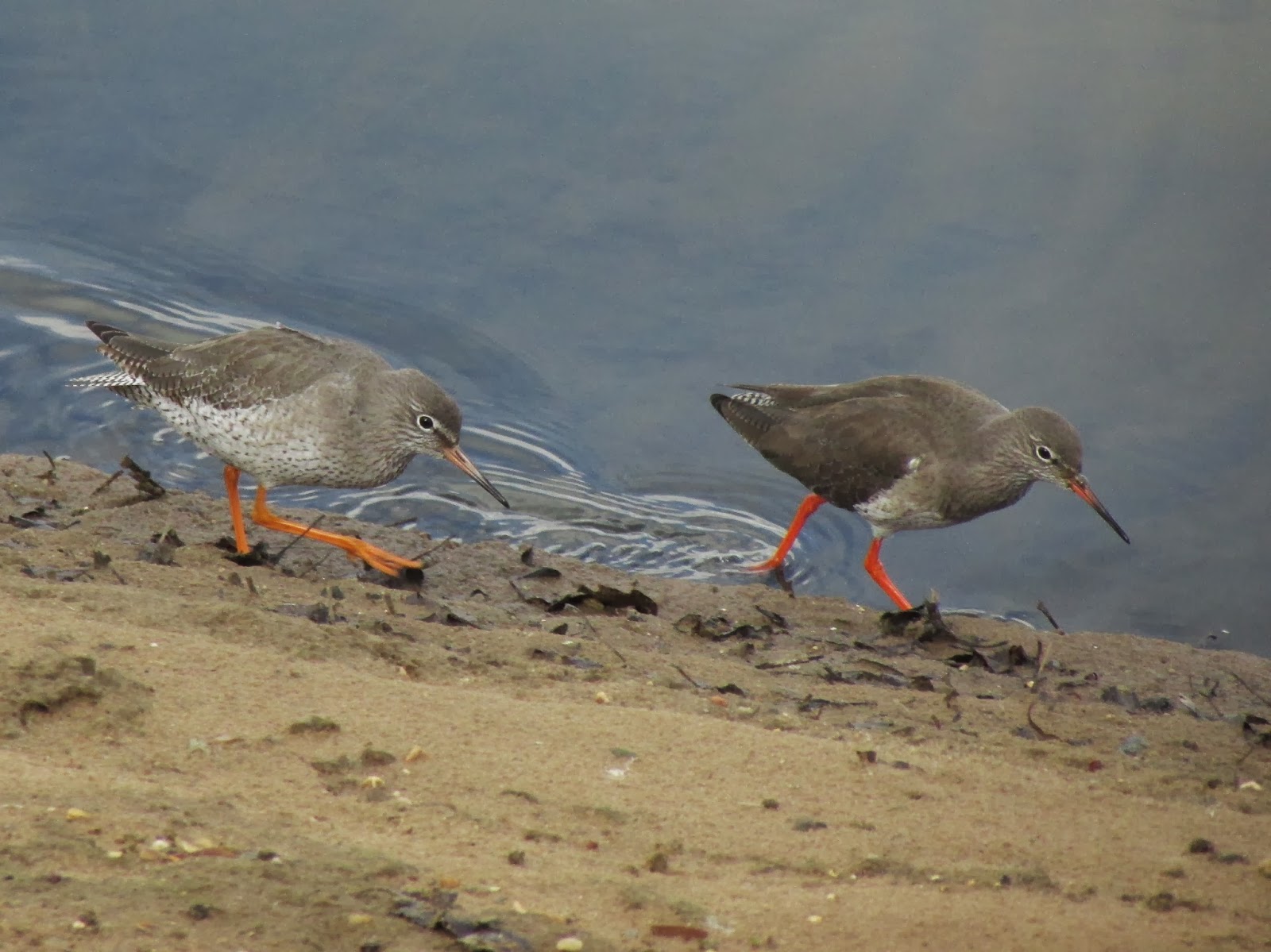
Redshank
Redshank feeding
Smew
Sheldrake wing flapping
Sheldrake
Teal
Tree sparrow

Monday, 10 February 2014

Balmy february at South Landing

We headed to South Landing today, the sea was calm and the sun shone most of the time. Out of the breeze was very pleasant. Once on the beach, we saw some Oystercatchers and a young Greater Black-backed gull. The tide was half way up, but there was no trace of the patch of seaweed to the left of the bay, so we saw no waders, other than the Oystercatchers and a couple of Curlew.
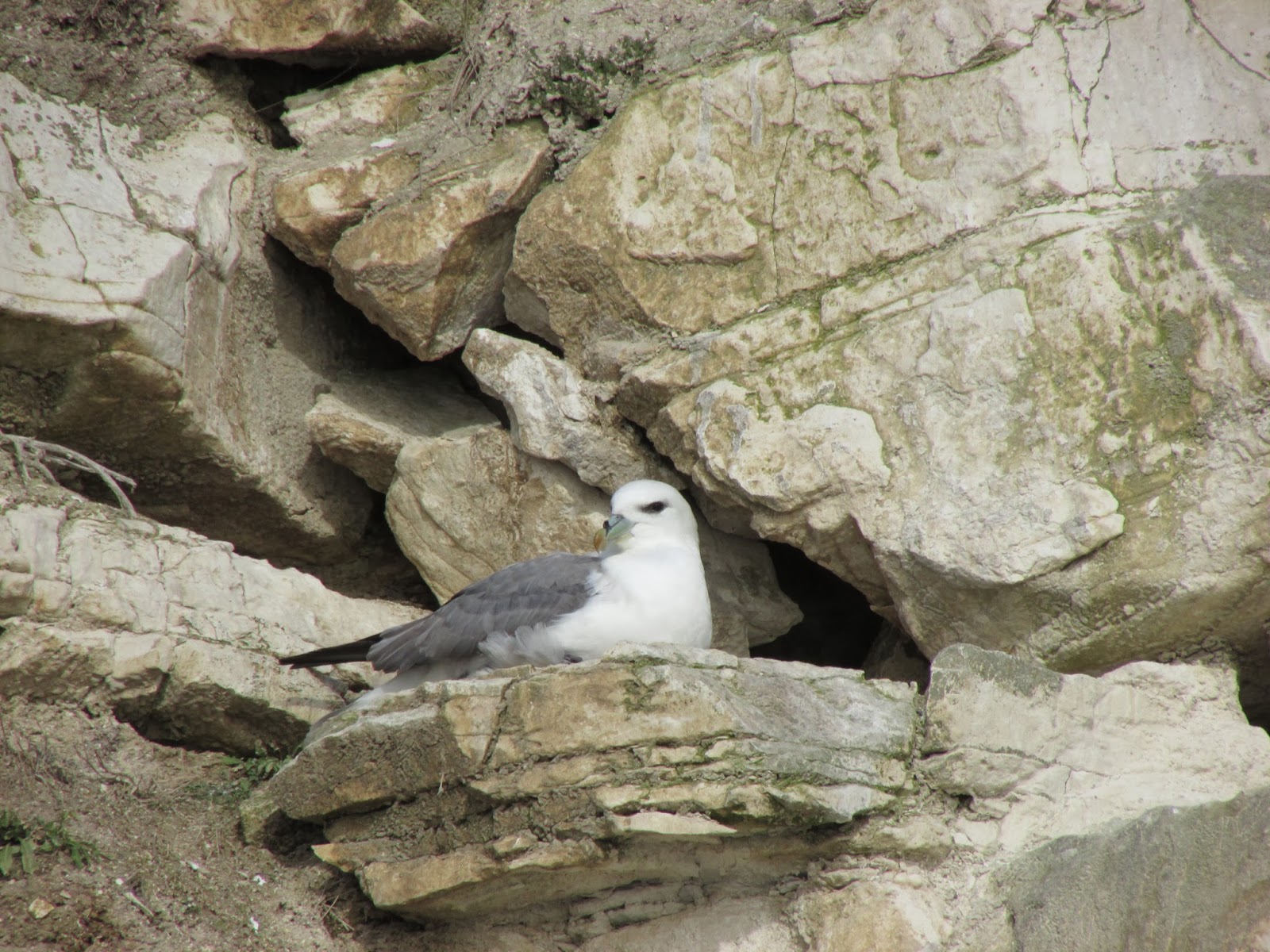
 We headed south towards Danes Dyke, lured by a Fulmar circling by the cliffs and a mystery pigeon. The fulmar turned out to be one of seven that were sitting on the ledges of the cliff, some already in pairs and noisily complaining when the flying individual passed too close.
The mystery pigeon was to be a Stock Dove, one of two who flew together. I had never seen this species by the coast.
A male Kestrel hovered over the cliff and we flushed a couple of Rock Pipits.
After turning round before the tide was too high, we went up the path to the walk around the little wooded valley. A very kind gentleman showed us the location of three roosting Woodcocks, my first chance to see this species at rest and take some photos.
 In the wood, there were Chaffinches, Great and Blue tits, Robins, a Treecreeper, some Crows and many Grey Squirrels.
 Atop the cliff we watched the sea, still, and watched a seal who seemed to be eating something. A lovely end of a great day out.
Oystercatchers
Young great-black backed gull feeding on seaweed
Fulmar calling
A pair see off a third individual
Male Kestrel hovering over the cliffs, and a few more shots of the fulmars


South Landing looking north
Cormorant
Woodcock
Another Woodcock, both looking awake.
Overwintering garden snails.
Grey seal.

Bird list
  1. Black-headed Gull    
  2. Blackbird    
  3. Blue Tit    
  4. Carrion Crow    
  5. Chaffinch    
  6. Cormorant    
  7. Curlew 2   
  8. Fulmar
  9. Goldcrest 1   
  10. Goldfinch    
  11. Great Black-backed Gull    
  12. Great Tit    
  13. Herring Gull    
  14. Kestrel
  15. Linnet    
  16. Oystercatcher    
  17. Pheasant    
  18. Redwing    
  19. Robin    
  20. Rock Pipit    
  21. Shag    
  22. Stock dove
  23. Treecreeper    
  24. Woodcock 4   
  25. Woodpigeon    
  26. Wren    
  27. unidentified diver, possibly Red Throated Diver    

Monday, 3 February 2014

Hedon Haven and Paull Holme Strays

We tried, and failed, to get to the Easternmost side of Hull this morning. The entrance to the area through the Chemical works plant was gated and we were told there was no access to the public footpath, and later we tried from the King George dock, but access to the path seemed difficult without knowing our way, so we went to Hedon Haven instead, which was a new place for me.
On the little beach by Paull village, a turnstone and a few redshank sat on a derelict wooden barge. A group of shiny black Cormorants crowned the posts marking the canal to Hedon Haven.
The tide was ebbing revealing the brown-pink mud of the Humber, and flocks of bird started to fly onto the mudflats: Redshank, Curlew, Shelduck, Dunlin and Black-headed gulls. The wind was relentless, but when we sat on the sheltered bank, the sun was shining and overall was a much pleasant morning that I was expecting. The haven itself is fringed by marsh and patches of reeds. Teal, Redshank and Curlew fed upstream, and a Skylark chirped briefly from the field behind us. It was very tranquil, and despite being right next to a large industrial works, a beautiful place.
 A pair of Great-Black Backed Gulls were flying about and at some point a large flock of Lapwing manoeuvred towards the coal depot and back over us.
 Afterwards, we headed to Paull Holme Strays and took the path west to the lighthouses. A massive flock of Golden Plover with some Lapwing steered like a murmuration over the saltmarsh and it was unclear what whas the cause of the flushing, although we did see a Marsh Harrier flying over the strays.
 Overall, a great day out, and made more interesting for the company of Robert and Gui.
Cormorants resting
 Flying Cormorant
A motley crew of mud-lovers: Black-headed gulls, Shelduck, Redshank.
 Barge skeleton
Curlew
 Another Curlew - I love Curlews!
 Greater Black-backed gulls
Rivulets on the mudflat 
 A view of Paull Holme Strays looking East.
 Golden Plover and Lapwing flock
 We saw a cream-head Marsh Harrier later, not sure if it was responsible for the flushed Golden Plovers.
 Curlew
 Resting Wigeon flock
Robert and Gui inspecting driftwood on Paull Holme Strays.

Bird List
  1. Black-headed Gull, HH.
  2. Carrion Crow, HH, PHS.
  3. Cormorant, HH.
  4. Curlew, PHS, HH
  5. Dunlin, PHS, HH.
  6. Golden Plover, PHS
  7. Great Black-backed Gull, HH
  8. Herring Gull, HH
  9. House Sparrow PHS, PV
  10. Kestrel, PHS
  11. Lapwing, HH, PHS
  12. Linnet, PHS
  13. Mallard, HH, PHS
  14. Marsh Harrier, PHS
  15. Redshank, PV, PHS, HH
  16. Robin, PHS
  17. Shelduck, HH, PHS
  18. Skylark, HH
  19. Starling, PV
  20. Teal, HH
  21. Turnstone, PV, PHS
  22. Wigeon, PHS
  23. Woodpigeon, HH, PHS